Dixieland Daze: Exploring college football in Alabama, a culture like no other

Photo credit: Conall Diggin
By Conall Diggin and Fionn Murray
“ALABAMA!?”
That was the common reply when I told family and friends I was heading to the States for the third time this year.
Having started watching American football ten years ago and sacrificing my Sunday evenings to the NFL in the process, the next logical step seemed to be losing my Saturdays by getting into college football.
This has, by some luck, led me to covering college football for Pro Football Ireland and with there being a game played in Ireland every season, it has been amazing experience.
The vast and colourful crowds of fans that have travelled over from places like Iowa, Nebraska and Kansas show just how much fans care about their teams.
After going to America for the first time earlier this year to cover the college football National Championship, my urge to watch a game on a college campus only grew and grew.
So, when my friend and colleague, Dáire Carragher said he was thinking about making a pilgrimage to Tuscaloosa for the Alabama Crimson Tide vs the Tennessee Volunteers, a rivalry simply known as ‘the third Saturday in October’, I couldn’t really say no.
This is the story of witnessing one of the most authentic college football experiences.
Southern hospitality
The culture shock hits you the minute you step off the plane. Landing in Birmingham, Alabama, at 9:30 PM, you’d expect a bit of a chill, but we were instead greeted by a balmy 25°C.
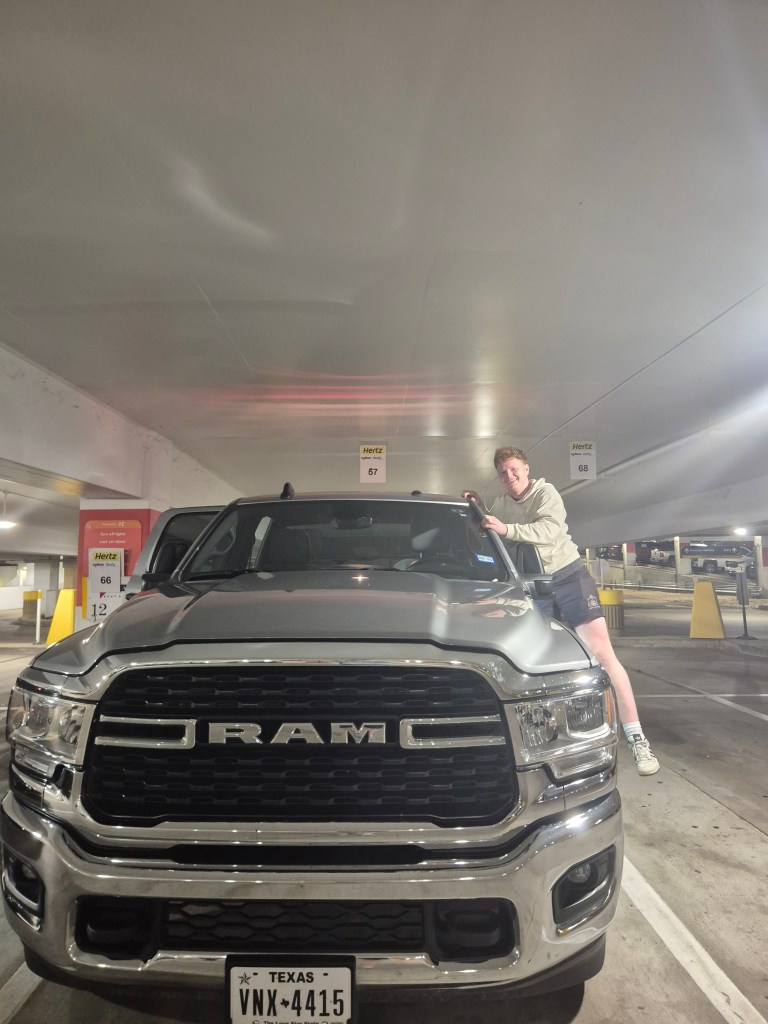
The next culture shock was luckily caught ahead of time. America’s notorious lack of public transport led us to booking a rental car beforehand, but as we went to click confirm, we saw that for $20 we could upgrade to a truck. This caught our interest.
After we picked up the keys at the airport, we knew we were looking for a pickup truck, but when we clicked the button on the fob, we couldn’t see anything. Then, out of the corner of my eye, I spotted lights flashing on what can only be described as a mini monster truck. If everything is bigger in Texas, I’d hate to have to drive a truck around there.
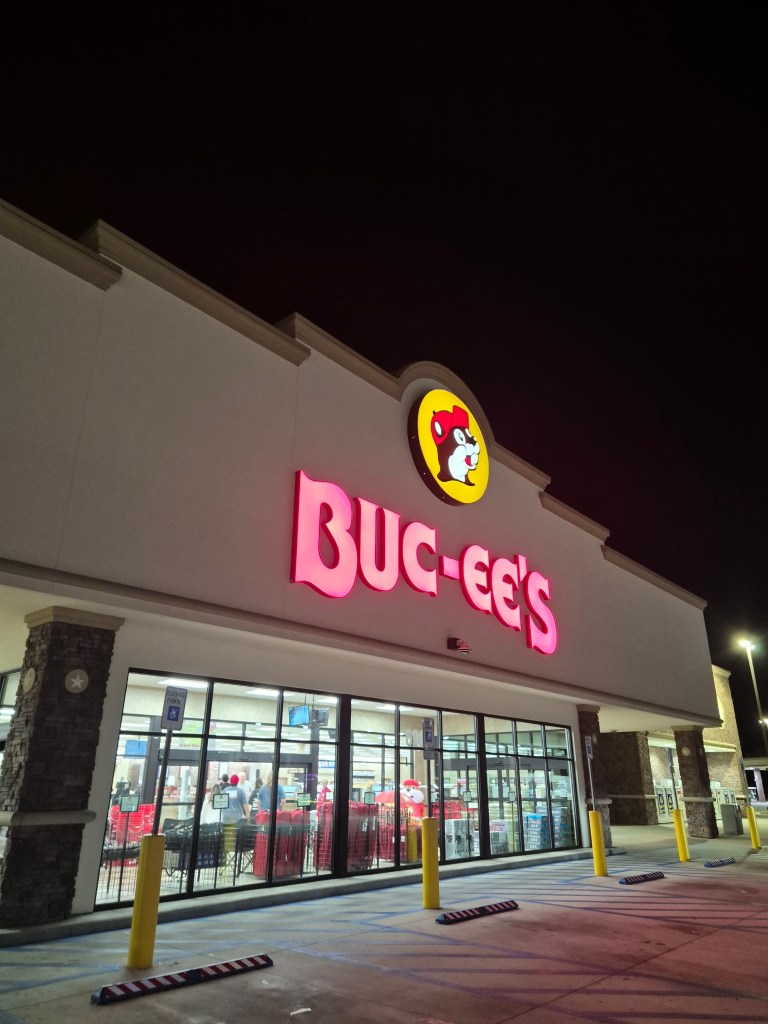
We arrived late enough that there was no sightseeing to be done except for taking a pit stop at Buc-ee’s, an eighty-pump filling station chain largely found only in the South.
Stepping inside is a sensory overload; the smell of sugar and meat cooking is not a pleasant one but one that you get used to quickly.
There is an avalanche of merch and Buc-ee’s branded food and drink throughout; the place is more akin to an attraction than a filling station and one that would put Obama Plaza to shame.
Little did we know what was waiting for us when we got to Tuscaloosa.
A different world
Stepping onto a college campus in the States feels more like stepping onto a movie set than an academic institution.
The University of Alabama is chock-full of old red brick buildings that have stood for hundreds of years. Most of these are for educational purposes, but a significant amount house some of the college’s 40 sororities and fraternities.
One of these houses is the home of the sorority Gamma Phi Beta, which cost over $13 million to build (€11.2 million) and is only a stone’s throw from the tenth biggest stadium in the world, Bryant-Denny Stadium.

The stadium itself looms over the college town of Tuscaloosa. Like Croke Park, its huge stands peak over the houses and buildings that surround it, dominating the local skyline.
The only difference being that Croke Park is used largely year-round for Gaelic games, rugby, concerts and, more recently, American football.
Bryant-Denny, on the other hand, outside of a handful of concerts, will likely only be filled six or seven times a year for Alabama home games.
Walking around the campus on gameday was a strange experience; imagine the filled streets of Jones’ Road before an All-Ireland Final combined with the glitz and glamour that comes from a Best Dressed Lady contest at a big horse racing event.
The boys all wear their nicest Alabama-branded clobber, while the women are dressed more like wedding guests than sports fans.
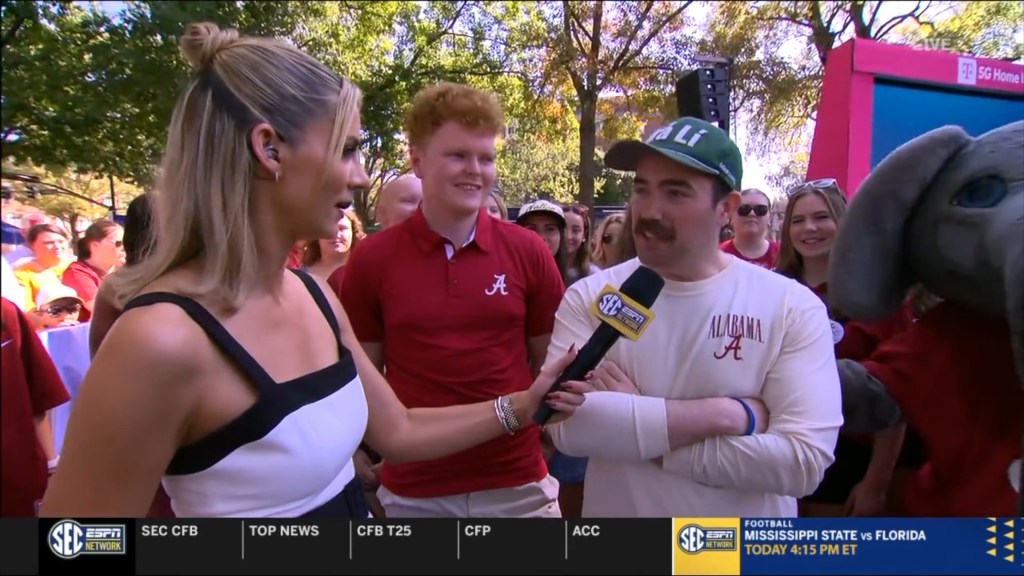
If the outside of these frat houses wasn’t enough to make you realise the wealth gap between Irish and American colleges, stepping inside one would make even the most well-off Irish student feel like a pauper.
Every meal is catered for; there are meeting halls, recreation areas, and more TVs than a Harvey Norman.
All this for over €15,000 a year on top of your notoriously high college fees – no wonder they can manage to fund a 100,000-seater stadium.
A common phrase on American social media is “The European mind can’t comprehend,” and it’s often used in reference to the pageantry and atmosphere surrounding their sports.
While the professional sports stateside generally feel watered down, the college experience truly does deliver, especially in Alabama.
The state has no major pro sports team, so the Alabama Crimson Tide is the biggest, most successful show in town and possibly the entire country.
Roll Tide!
Before kick-off, after the teams have finished warming up, the Alabama marching band (aptly nicknamed the Million Dollar Band) takes the field and strides through a series of intricately choreographed arrangements, all before the real show has even started.
As the band gets into another formation, the lights fade down and turn red.
The opening notes to AC/DC’s ‘Thunderstruck’ start to filter in through the sound system, and the Crimson Tide appear on the big screens throughout the stadium.
As they run out, the crowd go crazy before boos rain down as the visiting team emerge.
Just when you thought you could take your seat for the game, the ever-so-familiar guitar riff of ‘Sweet Home Alabama’ comes over the speakers.
Now it’s officially gametime.
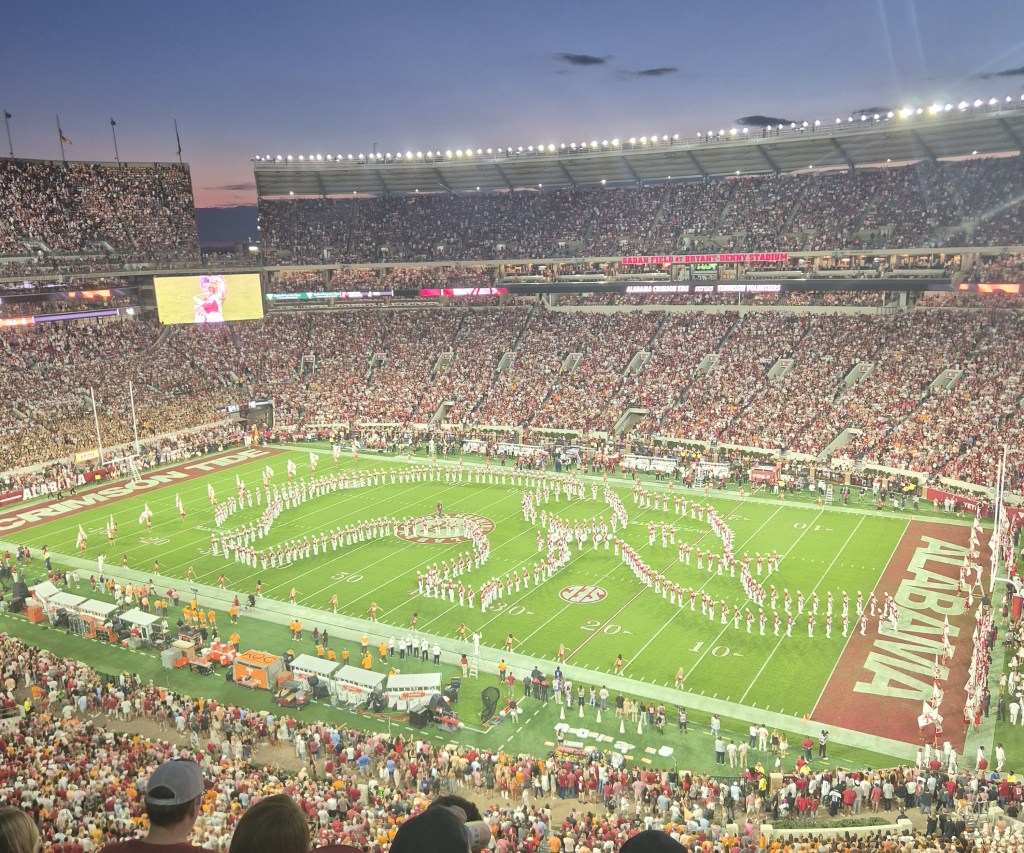
As the game goes on the noise is constant; every time the home team progresses the ball a chant of “Roll Tide” is boomed out. Every time the opposition tries to communicate and make any sort of play, they are drowned out with a mixture of boos and yells from the Alabama faithful.
Before the half, the home fans’ racket finally pays off, as Alabama defender Zabien Brown intercepts the ball on his own 1-yard line and returns it all the way for a touchdown. This is like Virgil Van Dijk clearing a ball off his own goal line before dribbling out of defence and sticking one in the top corner.
With 10 minutes left in the game and the Crimson Tide leading, a tradition I had long been looking forward to kicks off. As the teams line up, the speakers again start blaring with a song beloved in this part of the world: “Dixieland Delight,” by the fittingly named band Alabama.
It is accompanied by a series of adlibs about drinking beer, falling in love and, as any good sporting chant should do, poking fun at Alabama’s rivals Auburn, LSU and tonight’s victims Tennessee.
As the clock ticks down and Alabama storms home to a 37-20 victory over the Volunteers, the final tradition, which costs the university $100,000, begins.
Fans all around the stadium begin to light up cigars, the windy weather meaning more than a few needed to be relit. The cloud of smoke looms over the stadium just as the scoreboard looms over the Vols, all in celebration of beating a team from the next place over. What’s better than that?

Sweet Home
The obvious comparison to American college sports in Ireland are the Gaelic games.
College football is much more community-oriented than its pro counterparts, with many of the biggest teams coming from states without any pro team, like Alabama, Oklahoma and Iowa.
It’s similar to how counties like Kerry, Donegal and Mayo consistently punch above their weight because of the single-minded passion for a sport in these areas.
The most common question we were asked across the weekend was “How did you guys end up here?”
The reason was simple: we wanted to go and watch some real authentic college football, so just like if you went to England, Spain or Germany, you would want to go watch Liverpool, Barcelona or Bayern Munich, we thought, “Let’s go see the best game we can.”
That just happened to bring us to “Bama.”
ROLL TIDE!





1 thought on “Dixieland Daze: Exploring college football in Alabama, a culture like no other”