Infant remains found at former Mother and Baby Home in Tuam
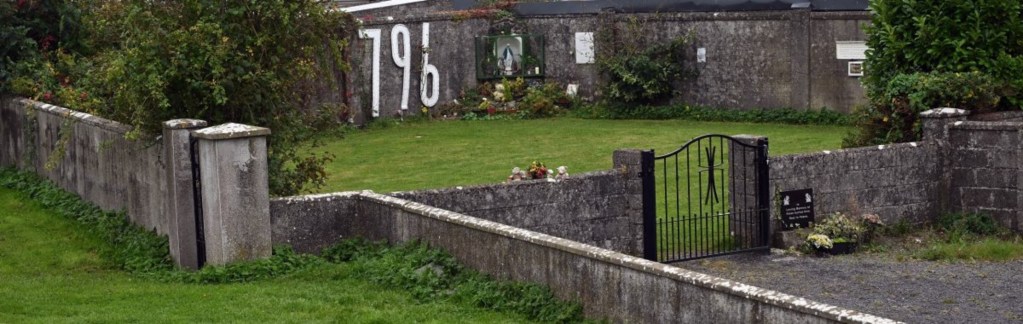
Source: ODAIT
Infant remains have been uncovered during ongoing excavations at the site of the former St. Mary’s Mother and Baby home in Tuam, Co. Galway.
In a statement, the Office of the Director of Authorized Intervention (ODAIT), which is overseeing the excavation, have confirmed that seven sets of human remains were found in a location near underground vault structures on the property.
While early examinations suggest that these skeletal remains belong to infants, forensic specialists will conduct a full analysis to confirm age at death and the historical period from which they date from.
Excavations began on the Tuam site on July 14, 2025, as part of a major project to recover and identify the remains of hundreds of children believed to have been buried in unmarked graves there between 1925 and 1961.
During this period, the institution was run by the Bon Secours Sisters, an order of Catholic nuns, however, the same site has also served as a workhouse (1841 to 1918) and as a military barracks (1918 to 1925).
Because of this varied past, ODAIT noted that the newly discovered remains could date from different historical periods, as was the case with other remains previously found on site from the workhouse era.
Radiocarbon dating and other methods of analysis will therefore be used to determine the period from which these latest discoveries originate.
ODAIT reported that the analysis is expected to take at least three months, with results to be published in an upcoming technical update.
The discovery adds to an ongoing investigation into what happened to children who died at the St. Mary’s institution, a story that first came to both national and international attention in 2014, following an investigation by local historian, Catherine Corless.
Corless said: “The information I gathered from the maps and records I discovered was distressing.
“A high number of babies and young children had died before the home was closed in 1961, but there were no burial records.”
Her research revealed that 796 infants and young children had died at the home between 1925 and 1961, none of whom received an official burial.
ODAIT’s foundation
After a decade of work, her findings prompted government investigations and ultimately led to the establishment of ODAIT to oversee the recovery and identification of the remains.
Alongside the updates from the forensic excavation, ODAIT also provided updates on the Identification Programme, which aims to match DNA from recovered remains with samples provided by living relatives.
The agency confirmed that it will begin contacting individuals who, since May 2023, have expressed interest in providing DNA samples.
Those contacted will receive guidance on the application process and the eligibility requirements and will be supported throughout each stage of participation.
ODAIT has also invited anyone who believes they may be related to someone buried at the Tuam site to come forward if they have not already done so.
Applications can be made directly through ODAIT’S official website, which provided full details on the programme and its next step.