Palestinian Ambassador to Ireland visits the University of Galway
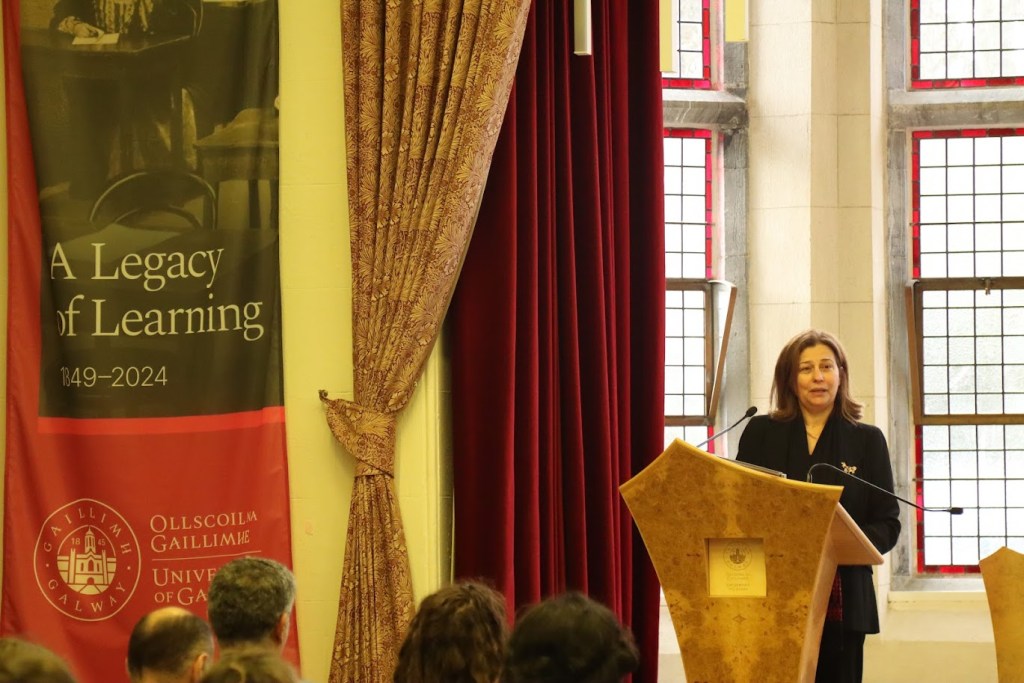
On Thursday 30th of January the newly appointed Palestinian Ambassador to Ireland, Dr Jilan Wahba Abdalmajid, visited the University of Galway for an exclusive public interview. This free event was hosted in the Aula Maxima by the university’s Journalism and Media Discipline, offering the opportunity for members of the public to gain a first-hand account of Dr. Wahba Abdalmajid’s extensive career and knowledge in Palestinian diplomatic service.
Dr. Wahba Abdalmajid’s career began in 1995 as Assistant Chief of Protocol at the Palestinian Ministry of Foreign Affairs. She then served in Cyprus before moving to Ireland seven years ago. In December 2024, she was appointed Ambassador of the State of Palestine to Ireland. She officially presented these credentials to President Michael D. Higgins following Ireland’s formal recognition of Palestine as a sovereign and independent state in May 2024, a move she describes as ‘historical’ and significant’. However, Dr. Wahba Abdalmajid feels that she has ‘always been treated as an ambassador here in Ireland’, emphasising that ‘the support and solidarity of the Irish people is reflected by the government’. The ambassador credits this to the shared history and mutual understanding between Ireland and Palestine ‘the history of colonisation makes us understand how people under occupation struggle for their freedom’.
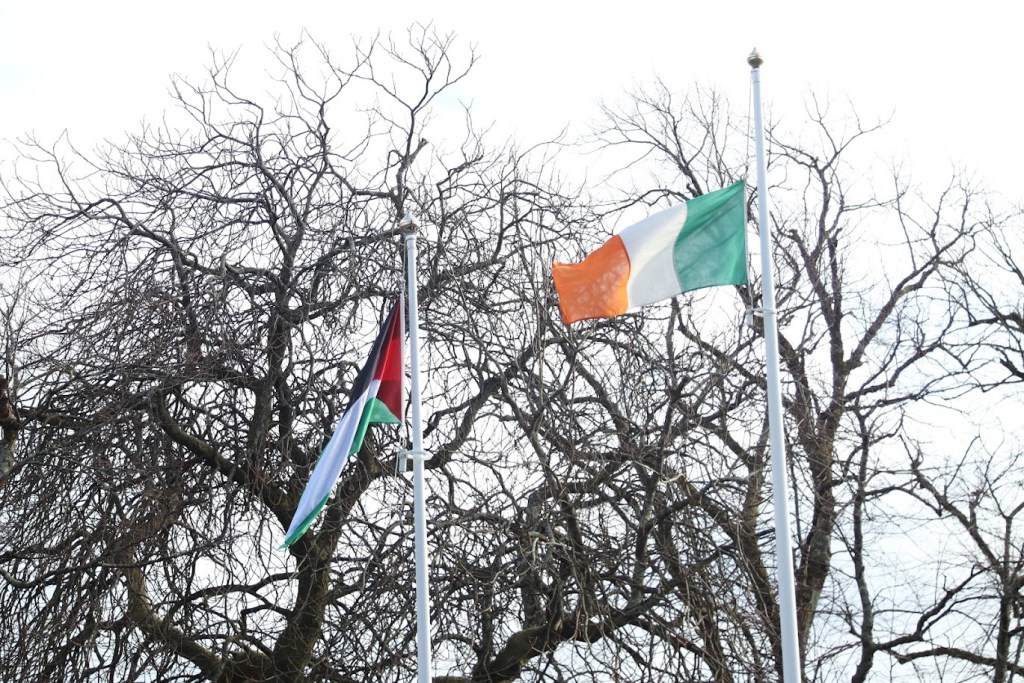
The importance of uniting people and cultivating a collective voice is central to the work of Dr. Jilan Wahba Abdalmajid. Her address at the University of Galway is one of many events she has led; connecting with the public is at the forefront of her work as an ambassador. She has dedicated a lot of her time travelling to Irish towns and villages, speaking to communities about the conflict, ‘from Kerry to Dublin, Waterford to Sligo, Mayo to Donegal, I try to be everywhere, to be with the people of Ireland who have given us support’. In the midst of a conflict which is centred around religious and political institutions, humanity is at the centre of the cause.
When asked about the ceasefire, the ambassador alludes to the fragility of the agreement, ‘I keep the hope, but I am not optimistic’. As hundreds of Palestinians return to Gaza to find their homes and villages in ruins, Dr. Wahba Abdalmajid recognises the difficulties with the rebuilding and restoration of her homeland. In the early days of the ceasefire agreement, it is difficult to predict the outcome of how relations will progress ‘I hope that Israel will respect their commitments, but it will be a complicated path toward our aspiration for freedom’.