Galway Light Rail system a “promising option” says Feasibility Study
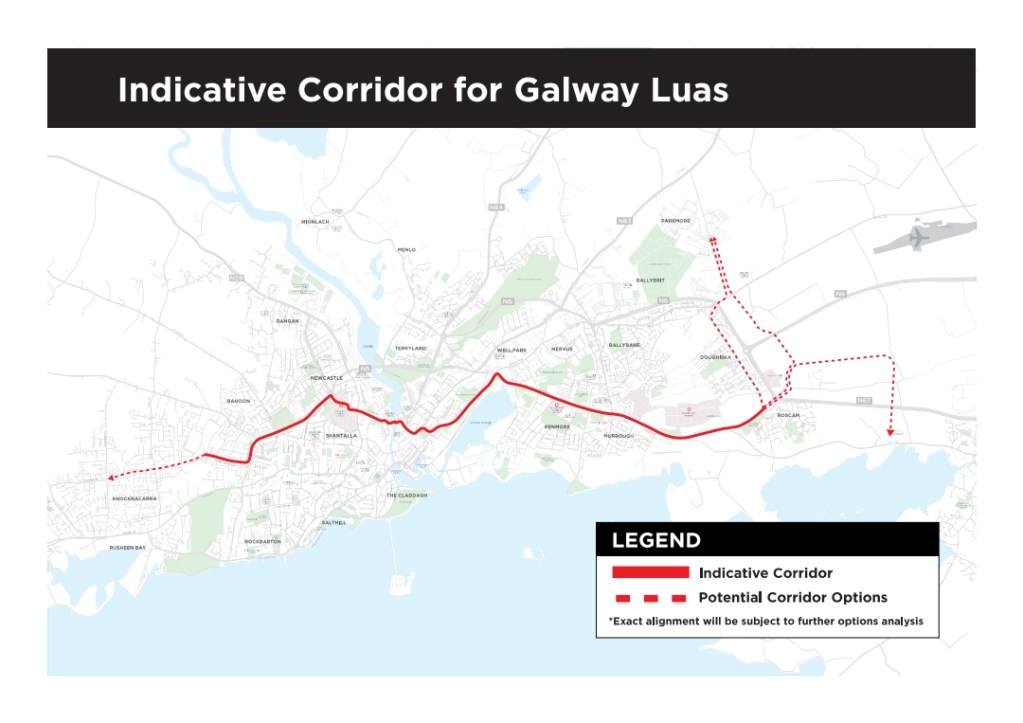
The Galway Light Rail feasibility study comes as part of the National Transport Authority’s plan, in conjunction with Galway City and County Councils to develop a new Galway Metropolitan Area Transport Strategy. The study was commissioned by the National Transport Authority (NTA) and was conducted by AtkinsRéalis.
It examined possible routes for the system known locally as GLUAS, the city’s current transportation needs and estimated population growth. It found that investment in a light rail system is a promising option for the city.
Local politicians have responded positively to the feasibility study.
Deputy Catherine Connolly believes a light rail network would alleviate traffic congestion, improve the connectivity of the city’s public transport network, enhance Galway’s air quality and significantly reduce the city’s transport-related carbon emissions. Deputy Connolly says, “After many years of campaigning on this issue with dedicated people on the ground, today marks a significant step towards bringing sustainable, accessible transit solutions to Galway. Investing in public transport infrastructure like light rail will bring lasting environmental, social and economic benefits and, crucially, will help the people of Galway by significantly reducing congestion, something we have been calling for over many years.”
Sinn Féin TD Mairéad Farrell echoed the positive sentiment for the light rail system. She has stressed the urgency of addressing the city’s traffic congestion and the need to explore the options available to integrate light rail into the transport system.
Farrell also highlighted the need for immediate solutions to the network, citing upgrades to the existing bus system as a short-term measure. She concluded that a versatile approach that incorporates light rail, the city’s bus network and a strong bus and rail network are key to combatting the traffic congestion problems.
It is estimated that the project will cost between €1.23b and €1.34b.
More information can be found on the NTA website.