Humanitarian crisis in Lebanon: ‘For the people living in Beirut, it’s a nightmare’
By Anne-Marie Brennan
As Israeli airstrikes continue across Lebanon, those abroad watch a humanitarian crisis unfold from afar.
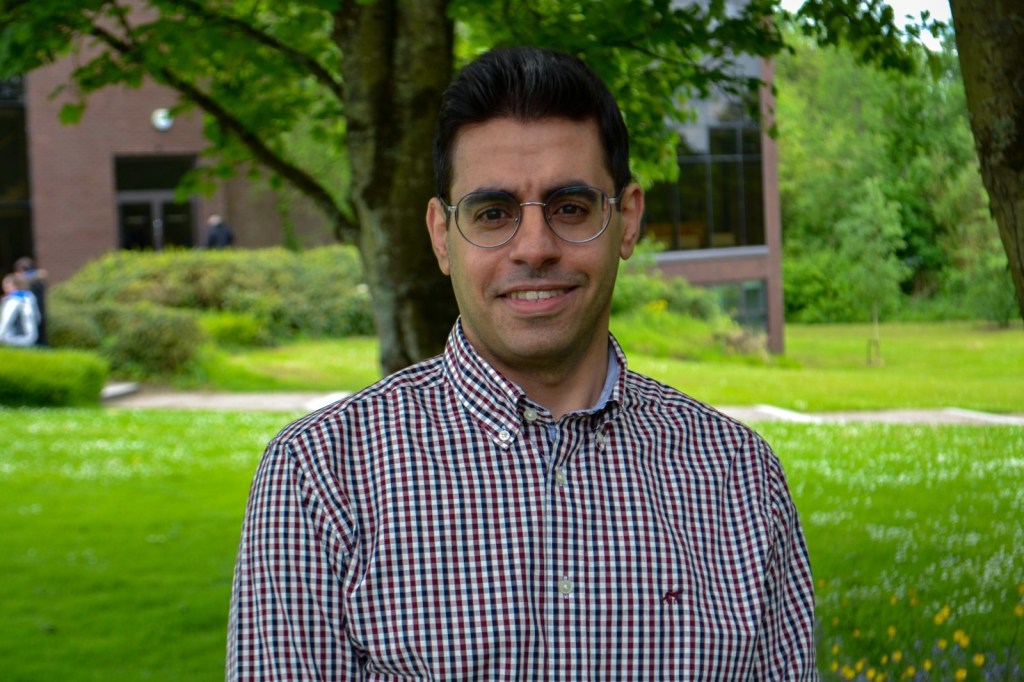
Galway Pulse spoke to Marc Ayoub, a Lebanese PhD researcher at the University of Galway, about the escalating situation and why the country cannot support those who have been displaced.
“I don’t think the Lebanese are prepared to deal with this current humanitarian crisis,” he said.
“On 23 [September], [Israel] asked all the people in the South to go North, then they started striking all the southern villages.
“It’s like striking Loughrea, Oranmore, all those small places and telling them all to come to Galway city.”
The Lebanese government estimated that the Israel-Hezbollah conflict has displaced roughly 1.2 million people, the UN Refugee Agency reported.
Ayoub spoke about the uncertainty for what is yet to come, and how long it will take for a resolution to be found.
“What our parents and what we’re fearing generally is this process is to become a lengthy one… and just a repetition of everything the world has seen in Gaza.”
He said that airstrikes usually start “after midnight” with residents receiving warnings 10 or 15 minutes beforehand.
“Every night now, for our parents, for the people living in Beirut, it’s a nightmare. They cannot sleep,” Ayoub explained.
“If it continues, Beirut suburbs will be like Gaza in just a few weeks’ time, there are currently no people there, there’s no life.”
Instability and economic crisis within Lebanon
“Although the country has been in an economic crisis, [now] it’s worse,” Ayoub said, referring to the financial collapse in 2019.
“The economic cost on us is huge, in terms of humanitarian and economic cost.”
The Lebanese-native explained that “because of the economic collapse and the lack of money, [schools] are not really prepared to be shelters. They don’t have water, gas, electricity, or sanitation [facilities]”.
There are currently 900 temporary shelters, most of which are public schools.
“Public schools haven’t started yet and there’s a threat that the whole academic year could be gone.”
Ayoub said that people’s morale is yet to recover from the 2019 financial crisis when the country experienced triple-digit inflation.
“People in safe areas, cannot really stand for long periods of time. They were really devastated politically, mentally, psychologically, [because] of the economic crisis.
“Imagine telling a 70-year-old person that you cannot get your money out of the bank because it’s been lost.
“So now you cannot tell them, ‘Look there is a war happening’.”
Ayoub commented on how Lebanon’s government and political system contributed to the financial crisis.
“The collapse of the economy, that started in October 2019, was the result of the political system”.
“The political system is based on confessionalism, that leads into corruption and mismanagement,” he added.
Confessionalism is an ideology which proportionally distributes political power to a country’s ethnic or religious communities.
Lebanon’s 128 parliament seats are divided equally between Christians and Muslims. The country officially recognises 18 religions and sects.
Division on the Israel-Hezbollah conflict
Ayoub noted that before Israel’s pager attack on 17 September the Hezbollah-Israel fighting “was restricted within a five-kilometre zone, on the Lebanese side and the Israeli side”.
“The goal of this was, on the Hezbollah side, was to keep the [Israeli] army busy… in the north [of Israel].”
According to NPR, around 63,000 Israelis remain displaced from the northern border area.
Ayoub mentioned the mixed-feelings of those in Lebanon towards the cross-border conflict.
“The division of opinion on the Lebanese side is that: ‘It is not our war, it’s not up to [Hezbollah] to decide to go to war on [its] own. This is a war that the government should decide on…’.”
However, he described the sense of unity among people in Lebanon amidst Israel’s escalating attacks.
“We believe, [in Lebanon], it is not the time now for people to blame each other. They’re trying to help each other as much as they [can].
“This is not the war of the whole Lebanese population. But after the pager issue everyone is in the same boat.”
Ayoub also expressed disappointment in the international community’s response to the regional unrest.
“Now it seems that the United States and Great Britain, everyone, is giving a green light for Israel to continue what they want to do.”