Israel-Gaza conflict reaches grim one-year milestone
By Chiara Alfieri
Today, 7 October marks the first anniversary of Hamas attacks, the Al Aqsa Flood, and the beginning of the Israel-Gaza conflict.
With over 41,000 Palestinian and 1,200 Israeli victims killed, the violence has now extended to Lebanon, Syria and Yemen.
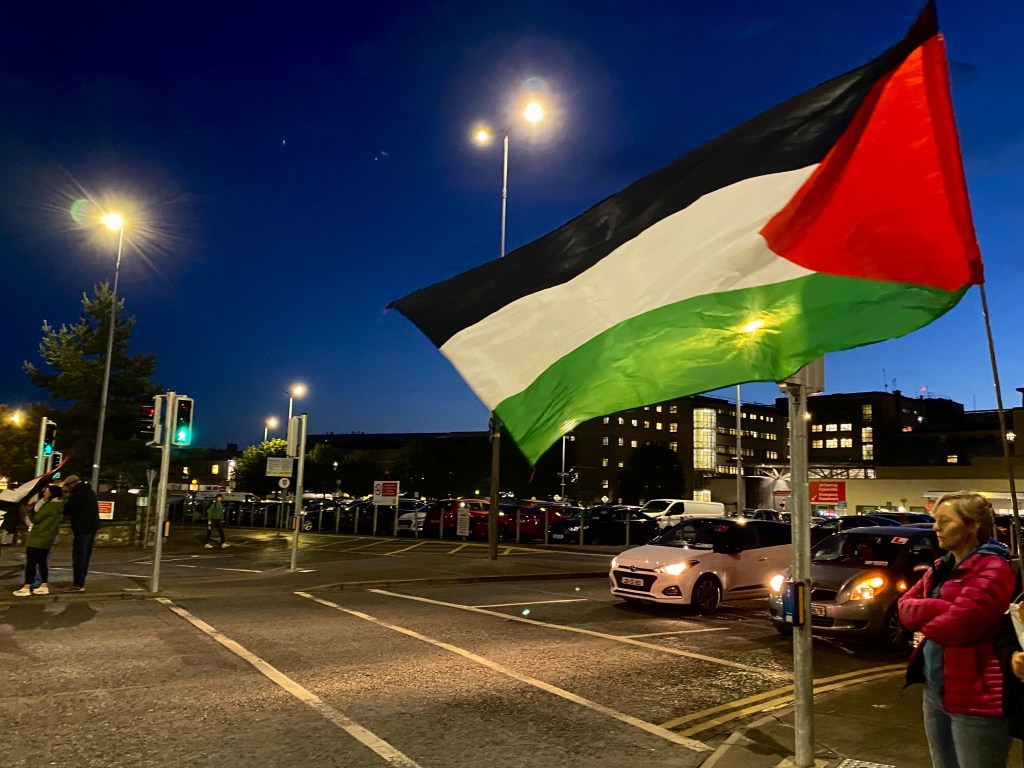
Events have been taking place to call for the release of Israeli hostages, while other demonstrations have been scheduled to highlight conditions in Gaza one year on.
Palestinian-Canadian Assistant Professor of Global Media and Communications at the University of Galway, Rounwah Bseiso, reflects on the events of the past year.
“The most incredible thing that I’ve witnessed is the compassion of the Irish public who have gone above and beyond in creating an incredible community and solidarity with Palestinians,” said Bseiso.
Commenting on the latest attacks by Israeli forces in Lebanon and the West bank Bsesio said, “Before it’s going to get better, it’s going to get immensely worse.”
“The struggle for decolonisation throughout history has taught us that colonial empires are significantly more violent when they are in decline.”
“Gazans aren’t going anywhere, that’s their home.”
In tandem with Bseiso’s insights, UN peacekeeper in the Middle East and professor at the Irish Centre for Human Rights, Dr. Raymond Murphy, declares to be “not optimistic” for the future of Palestine and the Gaza conflict, and recalls that “life for ordinary Palestinians is unbearable since Gaza has been erased to the ground.”
He also adds that “Gazans aren’t going anywhere, that’s their home.”
“We have the need for governments to support the right to self-determination wholeheartedly.”
“People should protest about the ongoing situation; it shouldn’t feel off the political agenda.”
When asked to deliver a message to her people, Bseiso said, “I love you, we love you, the world sees you now. They see your honour, they see your dignity, they see your strength and resilience, and the world stands with you. To stand on the side of the Palestinians is to stand on the side of justice, sustainability, and humanity.”
Bseiso remembers each and every Palestinian journalist that died while reporting on the ground.
The ‘Bloodiest period’ in the history of Journalism
According to the International Federation of Journalists (IFJ), at least 138 journalists have died in Palestine, Israel, Lebanon, and Syria during the 12 months of conflict.
The IFJ indeed defines it as the “bloodiest period in the history of journalism.”
Bseiso dedicates particular attention to shedding light on the painful experiences of journalists using social media to portray the reality of the genocide.
“It is fundamental to highlight the incredible work of Palestinian journalists who have tirelessly covered their own genocide and have allowed the world to see the lived and daily experience of Palestinians as it is, they have been filling a gap that Western media has not fulfilled.”
Bseiso speaks wholeheartedly about her origins and the collective memory and multi-generational trauma that Palestinians all over the world still have.
“What unites us is that we are all tied together to that land, it’s an unbreakable bond, and Palestinians will be liberated.”
The importance of raising awareness and donating
Bsesio encourages people to pressure governments to end their complicity, as does Dr Raymond Murphy who says that “we have allowed this to happen, there’s blood on our hands”.
Bseiso’s call for awareness suggests that there is a need to amplify Palestinian voices.
“On a personal level, you can raise awareness and use the correct language.”
Donations to organisations like the International Network For Aid, Relief And Assistance (INARA) or the Palestinian Children Relief Fund (PCRF) continue to support casualties of this widening conflict.
The testimonies and voices of Rounwah Bseiso and Raymond Murphy are just some of the voices of solidarity in support of the affected populations.
Up until now more than 186,000 are the reported victims of the Gaza conflict and over 96,700 are the civilians injured since October 7, 2023, according to a study published in The Lancet.





1 thought on “Israel-Gaza conflict reaches grim one-year milestone”