Galway launches Programme to increase participation of women in local government

Photo: Pixabay
The City and County Women’s Caucus in Galway announced the launch of a programme to increase Participation of Women and Diversity in Local Government.
The programme aims to underscore the necessity of increasing representation of women and marginalised groups in local politics, with a specific focus on preparing for the 2024 local elections. A two-day event at the Shearwater hotel in Ballinasloe was held on 29 February.
It will provide training, development courses, and discussions on key issues, aiming to encourage greater participation of women and diverse communities in elective political activities.
Sinéad Doody, a facilitator at Doody Facilitation and Consulting Ltd, said, “We must implement specific approaches and structures to address the underrepresentation of these women. It’s not just about increasing the overall number of women in local governments, it’s also about enhancing diversity within these institutions.”
“Without such targeted efforts, women from minority backgrounds will continue to be underrepresented as elected representatives,” said Ms Doody.
Representation and participation of women’s groups
The underrepresentation of women and diverse groups is prevalent across many industries, not limited to local or national political spheres.
- According to United Nations data, there is a lack of female representation in local governments globally, with only 36% of locally elected members being women. In Ireland, this figure drops to 23%, indicating a significant disparity compared to the global average.
- Ireland currently ranks 98th in the world (as of May 2022) for women’s representation in national parliaments, falling behind countries such as China and Iraq.
- Only 25.5% of county councillors throughout Ireland are female and there is a much lower percentage of female councilors in rural counties compared to local authorities in Dublin and the surrounding counties.
- The total number of women councillors as of September 2022 now stands at 242 or 25.5% which is a 1.4% increase since 2019.
- As of 5 December 2022, there are a total of 12 female councillors in Galway County and Galway City combined, while the number of male councillors is 45. This means that there are nearly 4 times the amount of male councillors than female councillors.
Initiatives and actions of the programme
Efforts towards the 2024 Local Elections: Focus on training and development with an emphasis on inclusivity, diversity and understanding of the political landscape to support and encourage greater participation of women and marginalised groups in the 2024 local elections.
Retention of Existing Councillors: Support the personal development, leadership and adaptability of current female councillors through professional development training. Additionally, share experiences of existing elected members and potential candidates to further support women’s participation in leadership roles.
Family-Friendly Local Authorities: Discuss how to create more family-friendly local authorities and empower women and marginalised groups to participate in all aspects of political life.
Online Safety and Social Media Use: Organise training workshops to raise awareness and provide advice and guidance on online safety and social media use for elected members and candidates.

The importance of women and diverse groups’ status in politics
Governance and policy-making should represent the entirety of society, not just the interests of a few. By increasing the participation of women and diverse groups in politics, it ensures that a greater diversity of voices is heard, enabling the formulation of more inclusive policies.
If the political sphere is dominated by a minority, policies may neglect the interests of other groups. Therefore, increasing the participation of women and diverse groups is crucial to ensuring more comprehensive policy-making.
Cllr. Martina O’Connor of Galway City Council said, “I think in Ireland we have made considerable progress in that regard. Men and women have equal access to higher education, which they did not have 10, 20, 30 years ago.“
“However, in terms of political representation, we still need to further eliminate gender bias and discrimination.“
Equality of opportunity in the political sphere is fundamental to achieving social justice and equality. Exclusion of certain groups from political decision-making exacerbates social inequality. Promoting greater inclusivity in politics is essential for steering society towards greater fairness and equality.
Success of women and diverse groups in politics can inspire more individuals to engage in political activities. Witnessing representatives from their own communities making an impact in politics can motivate others to seek similar opportunities, believing in their own capacity to make significant contributions.
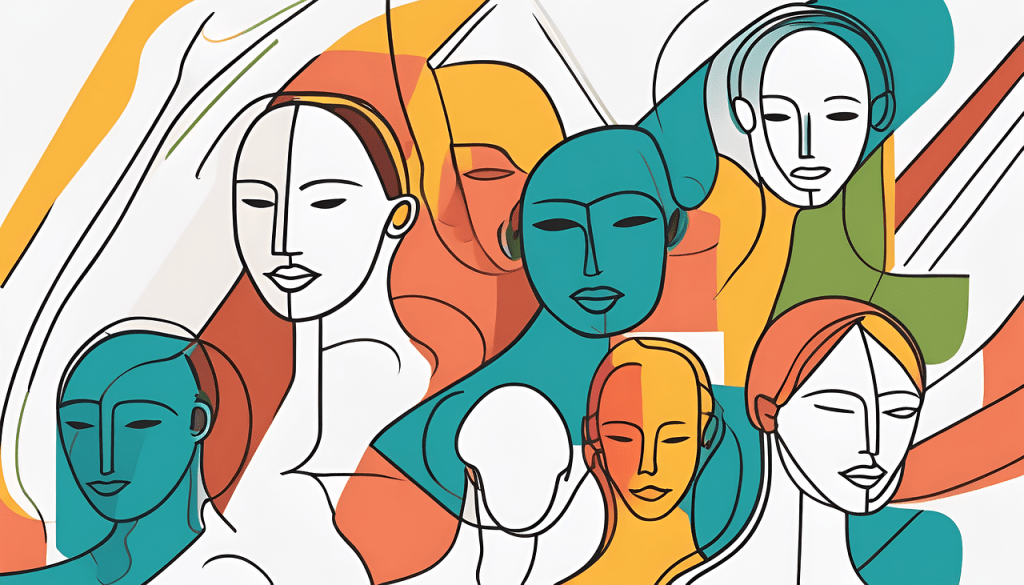
Photo: Pixabay
About Women’s Caucus in Ireland
A women’s caucus can be described as a membership-based network of women councillors from all political parties, who come together to strengthen cooperation and work towards agreed goals. In recent years, they have become more prominent in Irish Local Government.
The first Women’s Caucus in Ireland was established in 2021 and is currently in a pilot phase until March 2024. This network comprises 13 female councillors from three adjoining regions of local government areas: the Western, Central, and Northern regions of Ireland, including Galway County and City.
The purpose is to enhance collaboration among female councillors in the region and provide them with a mechanism to collectively advance gender equality both within and outside the council chambers.
The aim is to strengthen collaboration between women councillors in the region and to provide a mechanism for them to collectively advance gender equality in the Council chamber and beyond.