Climate Change Assessment: Galway caught in rising sea levels and storms
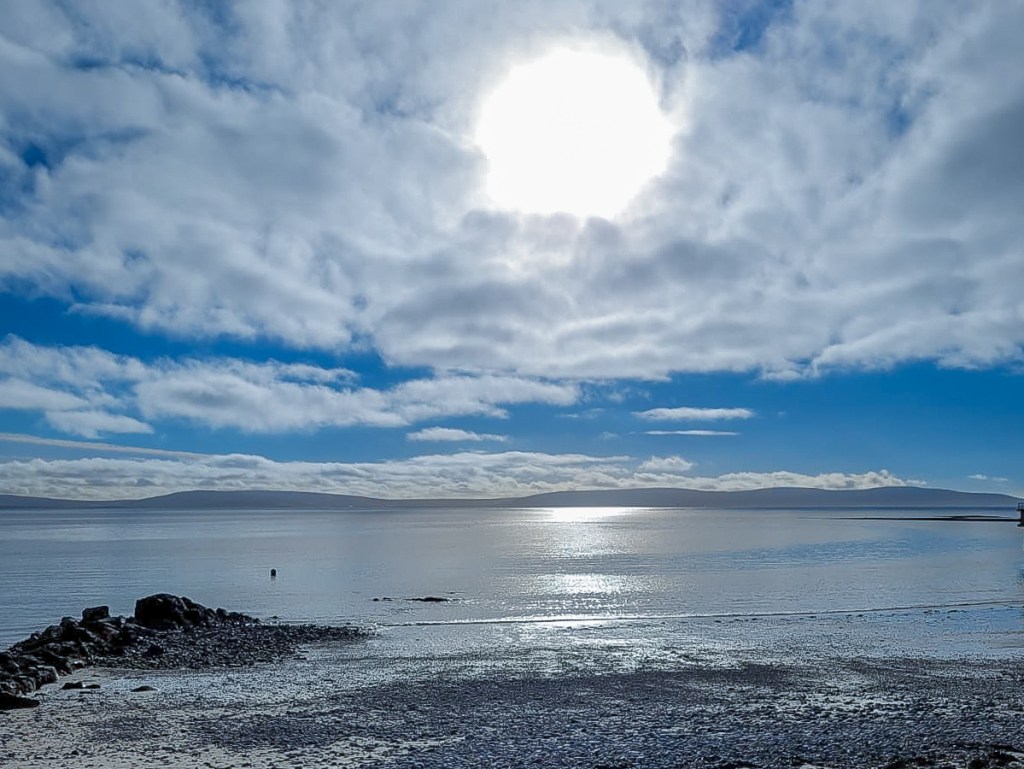
Salthill Beach / Photo by Jonathan Burke
Ireland is “highly exposed” to sea level rise and storm surges, according to the country’s first Climate Change Assessment.
The assessment, funded by the Environmental Protection Agency, came at the heels of Storms Isha and Jocelyn, which left tens of thousands without power.
As a coastal city, Galway is put to the test posed by these two elements, especially under the backdrop of a changing climate.
Talking about the surges of storms as it relates to climate change, Maynooth University’s Emeritus Professor John Sweeney, who specialises in climate change and climatology, said it is “complicated.”
“Warmer ocean would be expected to produce greater energy transfer to the atmosphere above and thus induce greater storm development,” he said, however the “the location of the storm tracks” also plays a part in it.
“Certainly we are in a stormy winter at present, but it is not clear whether this is part of a trend towards increased storminess or not,” he said.
Professor Sweeney noted that the worst recorded winter for storms in Ireland occurred in 2013-14. “A consensus view at present might be that we will get fewer but larger storm events, but there is great uncertainty over this,” he said.
Although the link between storm surges and the warming climate is still uncertain according to experts, an ever-increasing sea level is a challenge coastal cities across the country like Galway are currently facing. And according to Professor Sweeney, this exacerbates the impacts of storm surges.
“Galway is very vulnerable to rising sea levels,” said Gerard McCarthy, associate professor in Geography at Maynooth University. He referenced Storm Eleanor, an extratropical cyclone that swept western Europe in 2018 and claimed 6 lives.
According to research done by Maynooth University, Storm Eleanor brought up the water levels around Galway by 3.7m.
Línte na Farraige, supported by the Galway City Council, is a 2022-launched project that predicts future sea level rise by using LED lines installed at areas around Spanish Arch.
Professor McCarthy, who is also a member of the project, said, “We envisioned a future with sea levels 1 m higher than these levels (the LED lines) driven by climate change.”
“In reality, while climate change will eventually bring these levels, bad luck could have already caused them in the past. If you combine the biggest natural tides of recent years of almost 3m, with the biggest storms such as Storm Ophelia in 2017, waters could have already reached over 4.5m, which would be a devastating scenario for Galway,” he said.
“Given that change in the coastal area is inevitable, adaptation is required in terms of ensuring key infrastructural assets are protected as far as possible,” said Professor Sweeney.




1 thought on “Climate Change Assessment: Galway caught in rising sea levels and storms”