Ballyloughane’s Dexter cows: Galway’s new biodiversity champions
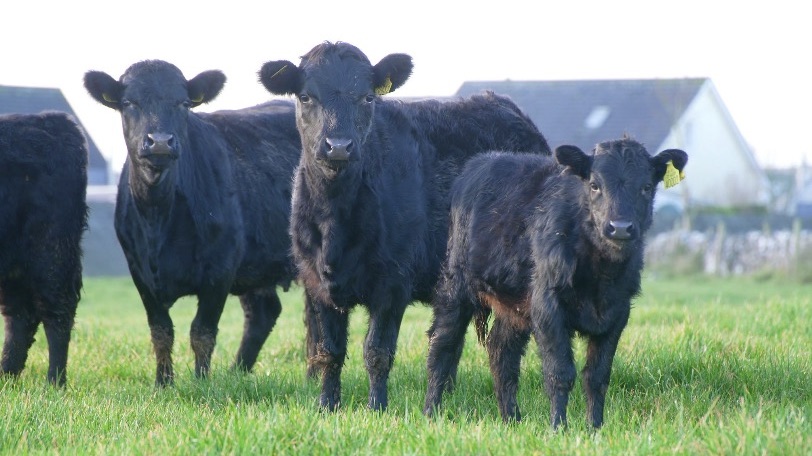
Three Dexter cows grazing / Photo by Keith Fahy
Galway City Council is piloting a biodiversity project bringing eight Dexter cows to graze the headland east of Ballyloughane Beach over the winter months. The grazing of the cows will increase biodiversity and act as a carbon sequester, removing carbon from the atmosphere.
Paula Kearney, Galway City Biodiversity Officer said the ‘Buaile Bó Ballyloughane’ initiative is part of Galway City’s nature-based solutions that “are working with nature to combat societal problems and climate change.”
Very important for the project is the closeness to local communities to “observe and understand the role these habitats play in climate action and mitigation,” Ms Kearney said. Grasslands and meadows absorb carbon from the atmosphere and produce oxygen.
‘No Mow’ Land
The headland near Ballyloughane Beach is ‘No Mow’ land that is only mowed once or twice a year. “In the headland in Ballyloughane, we have very rich soil. The grassland is very heavy,” Ms Kearney said, “mowing can be quite damaging on the soil”.
The grazing cows will create patches of bare ground and help provide good conditions for wildflowers, she said, as well as reducing emissions and disturbance of pollinators and other wildlife.
Native cows
Galway City Council has partnered up with local farmers Keith and Francis Fahy, who have had Dexter cows for two and a half years. “I was very keen on having a heritage breed gazing this land”, said Ms Kearney about the family of Dexter cows.
“Most animals we have in Ireland are breeds from other countries,” Keith Fahy said, “Dexter cows are one of the few native Irish breeds.”
“Animal welfare was obviously paramount,” Ms Kearny said. “If the animals weren’t going to be happy and looked after there, the project wouldn’t have worked”.
Francis Fahy said Dexter cows were perfect for the conditions of the headland: “They are easy to maintain and resident to the weather (…) they can survive in harsh conditions of the Irish winter.”
Sustainable farming
“Farmers are custodians of our landscape and they have been for four thousand years,” Ms Kearney said, “it is very important to highlight the role that agriculture has in sustaining Ireland’s biodiversity.”
She said working with local farmers was really important for the project. “A lot of farmers feel like they have been demonized because of climate change, but with sustainable agricultural practices, you can actually have no one at a loss and manage your greenhouse gas emissions. It is very much through lower stock rates and sustainable management of the grasslands.”
Educational purposes
School children and local residents will also have a chance to learn about the animals, biodiversity and the environment through the initiative.
“They will monitor the biodiversity within the space,” Sharon Connolly, Head of Environment, Climate Change, Parks and Recreation at Galway City Council, said.
An educational facet of the project is to give children a closeness to nature, particularly “children who may have never seen a cow or livestock and have forgotten where our food comes from,” Ms Connolly said.
Local support
Galway City Council has set up a ‘Buaile Bó Ballyloughane’ ambassadors programme, hoping to gain interest and engagement from the community.
“Anyone can sign up to be an ambassador,” said Ms Kearney. Ambassadors get a hat and a vest with the project logo. The purpose is to “have people out walking in the area to talk about the project”.
So far, she has seen “amazing support of the project”.
More opportunities to battle climate change
Galway City Council has many more biodiversity projects in the works, such as the fencing at Grattan Beach. Ms Kearney sees “opportunities for a number of nature-based solutions in Ballyloughane”.
“Salt marsh, seagrass and mangroves [in Ballyloughane] are some of the most effective habitats of carbon storage; they have a very significant role in our battle against climate change,” she said, “it’s really about understanding the resource of that in Galway City and our coastal area.”
Information
Citizens who are interested in more information can visit the Galway City Council website dedicated to ‘Buaile Bó Ballyloughane ‘.