Rab Fulton on 20 Years of Celtic Storytelling
By Paulina Dobisz
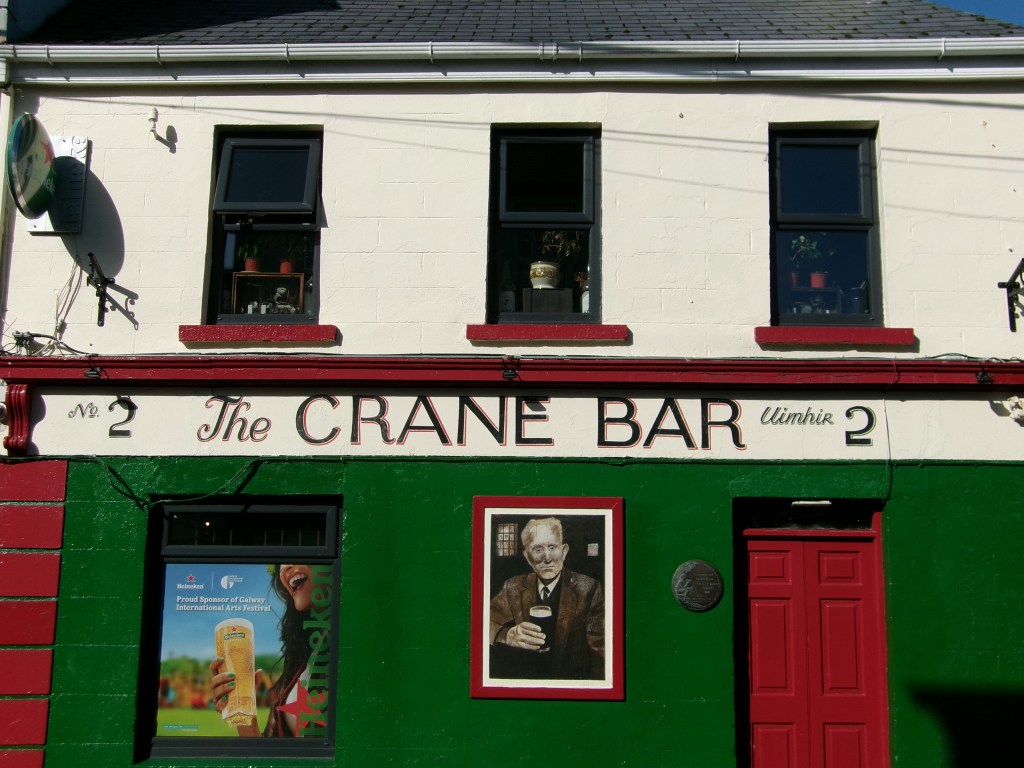
Every week, Rab Fulton hosts his Celtic Storytelling show in the Crane Bar. The pub nestled in Galway’s Westend, sets the ambience with flickering candle flames around the low tables. The soft light creates an intimate space, one that is filled with chuckles, gasps and silence as Rab Fulton captures his audience in a world of folklore.
Next year, big milestones and celebrations are to be reached, marking 20 years of the Celtic Storytelling show and Rab Fulton turning 60-years-old. Since 2007, Rab Fulton has been captivating his audience with his theatrical expressions and sharing his passion of storytelling.
“I was brought up surrounded by stories; I was very lucky.” Originally from Glasglow, Rab has always been immersed within the verbal culture of storytelling. “I was surrounded by stories from the moment I arrived on the planet.” Despite being encompassed by a very rich Scottish dialect, he takes pride in his Irish heritage.
A lot of myths have shared stories from Ireland, he says. “Every Irish story you hear, there’s a Scottish equivalent or the characters in it will be travelling to Scotland. It’s part of the same landscape and stories.” His current work delves into the Scottish version of Deirdre of the Sorrows, a classic Irish story. “It’s only when I’m older and I’m starting to examine stories, I realise there are things in there that are very old elements to the stories I was brought up with.”
Turning 60-years-old next year, leads Rab Fulton to wonder whether it is time to create a plan. “I have consistently avoided a plan in my life, but so far, I’ve managed to get by without.” Fulton began his Celtic Storytelling show journey in a former pub in Salthill called, The Cottage Bar. “It had a room, it was open and I loved it, it was a nice energy, but the Crane has got this dedicated space for the trad musicians, and it just works so well for traditional storytelling.”
His approach to the stories he showcases has changed over the last 20 years. “At the start, I just wanted to show how much I knew and how brilliant I was, which is what everybody wants to do. I tried to pack as many stories as possible.” On the night of his Celtic Storytelling show, Rab would try to navigate how to tell the story. As he’s matured, he doesn’t pack in as many stories as possible. The other night he only told one. “I take my time with it. I sit in it, and I don’t feel the need to show off.”
Fulton’s Celtic Storytelling shows focus on his connection with the audience. “I’ve become more aware of how the audience is part of the show, they make every show. So, every show is unique.” Fulton embraces the verbal culture of storytelling and passionately shares his own enjoyment of the tradition with the listeners.
The process of Fulton’s research holds many different forms; websites, articles and books. “I love digging into finding really obscure tidbits and footnotes are great, because footnotes can lead you on a lot of journeys as well.” These lead to reference points where Fulton can see the links of characters that are shared in other folktales. “As a storyteller, I’m like, oh, I like that. I can see how I can weave that together. To make a story that starts off very beautifully, but with this undertone, and then bring it into this very, very, very dark.”
The development of the folktales for Fulton’s Celtic Storytelling shows follows a laborious process. “I have to work on it. Research it. Rehearse it. And sometimes I do all that and at the end of the day, it’s not going to work.” For Rab Fulton, his Celtic Storytelling shows are not only an opportunity to gather people together and share the tradition of folktales but it’s something he loves. “Whatever story I’m doing, I’m trying to get it as alive and vivid and real for the audience and myself.”