Presidential Election 2025: Why your vote matters
By Onaleigh Earls
We are only hours away from electing a new Uachtarán na hÉireann, but what does this title actually mean for us?
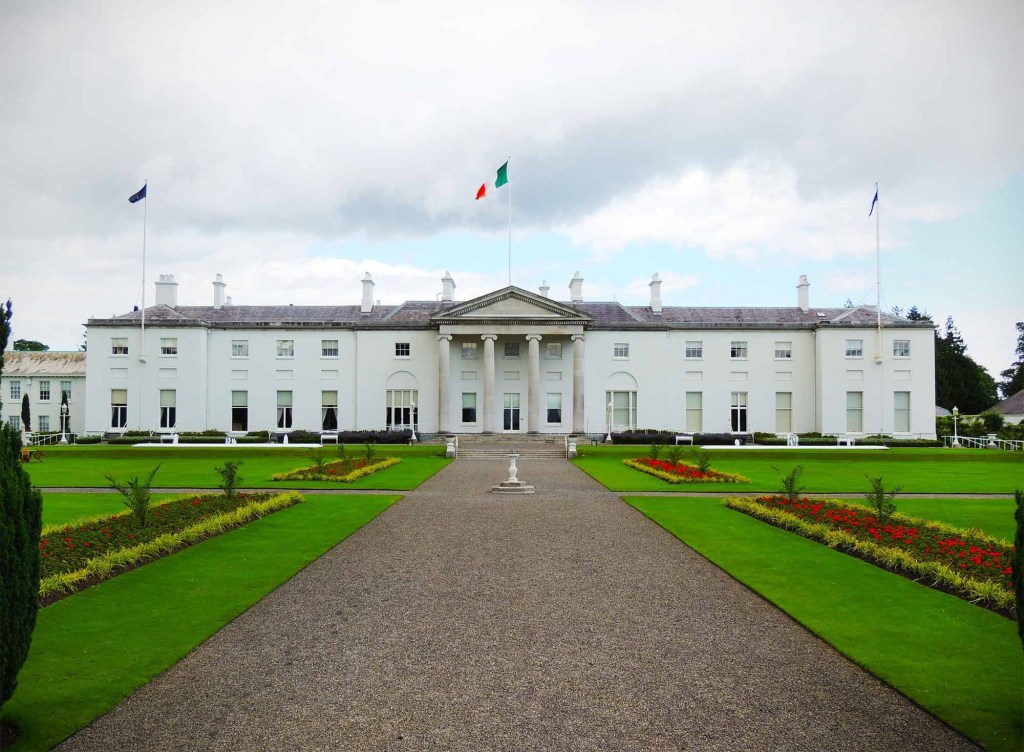
It seems simple: we’re judging each candidate on their morals, experience, and qualifications to become the tenth President of Ireland. But what really happens once they move into Áras an Uachtaráin?
Many of us think we know who we’re voting for after following the campaigns, while others remain undecided and some plan to spoil their vote altogether. But why? What does the role actually entail, and are we perhaps over-analysing it?
The President’s duties are laid out in the Irish Constitution some of which have never been used. When most people think of the presidency, the first word that comes to mind is representation.
The President stands as a symbol of the Irish people, both on Irish soil and around the world. Their values and the way they express them are meant to reflect the values of the nation itself.
At home, we see the President giving speeches, attending public events, and meeting communities. Internationally, they welcome visiting heads of state with a warm Céad Míle Fáilte, and when travelling overseas, they promote what it means to be Irish. Showcasing our culture, creativity, and compassion to the world.
It’s a largely symbolic role, but one we must choose carefully.
Since the presidency was established in 1938, each holder of the office has shaped it in their own way changing how Ireland presents itself and what the presidency represents.
Michael D. Higgins has captured the hearts of the nation. For many younger people, “Miggeldy” is the only president they have ever known. Over his fourteen years in office, he has been described as the conscience of the nation.
Drawing on his background in human rights, culture, and the arts, Higgins gave the presidency a strong moral voice. He deepened Ireland’s international identity and redefined the office as one of reflection and principle. While he didn’t alter the presidency’s formal powers, he pushed its boundaries speaking out on government policy, housing, and social justice, and condemning war and oppression, including the conflict in Gaza.
His outspoken stance even drew criticism from Israeli Prime Minister Benjamin Netanyahu, who accused him of antisemitism, a sign of how visible and vocal the modern presidency has become.
This transformation of the presidency as a moral and activist voice truly began with Mary Robinson, Ireland’s first female president.
Robinson brought empathy, global awareness, and reformist energy to the office. She became a figurehead for Irish women and a champion of human rights. Many still regard her as Ireland’s best president.
Her tenure was defined by courage and independence. She went against the wishes of the Taoiseach to meet the Dalai Lama, and she made history by shaking hands with both Queen Elizabeth II and Gerry Adams. These moments broke barriers and symbolised a more open, reconciled Ireland.
Robinson’s successor, Mary McAleese, carried this activism forward. As the first president from Northern Ireland, she made reconciliation and peace the hallmarks of her presidency. Her motto, “Building Bridges,” reflected her commitment to healing divisions between North and South of the border, as well as advocating for social change and LGBTQ+ rights.
Before these transformative presidencies, the office was stable, cautious, and largely ceremonial. It focused on unity, Irish identity, and representing the state rather than challenging it. From Douglas Hyde to Éamon de Valera, the presidency mirrored the government’s tone and direction.
An important exception was Cearbhall Ó Dálaigh, who resigned in 1976 after a clash with the Fine Gael government. His decision to refer the Emergency Powers Bill to the Supreme Court demonstrated the President’s constitutional independence and the ability to question legislation before it becomes law.
While the President rarely acts alone, they are supported by a Council of State, which advises them on key constitutional decisions.
The presidency may be symbolic, but it reflects who we are as a nation, our values, our compassion, our conscience. From Hyde’s cultural nationalism to Higgins’ global humanitarianism, the evolution of the office tells the story of modern Ireland itself: proud, independent, and unafraid to speak up for what is right.
As we head to the polls, remember your vote is your voice in choosing the person who will represent Ireland to the world and embody the spirit of our people. So, take the time to vote, and help shape the next chapter of our nation’s story.