“Don’t Send Us Back Home”; how migration inspires Galway busker Valter Romulo
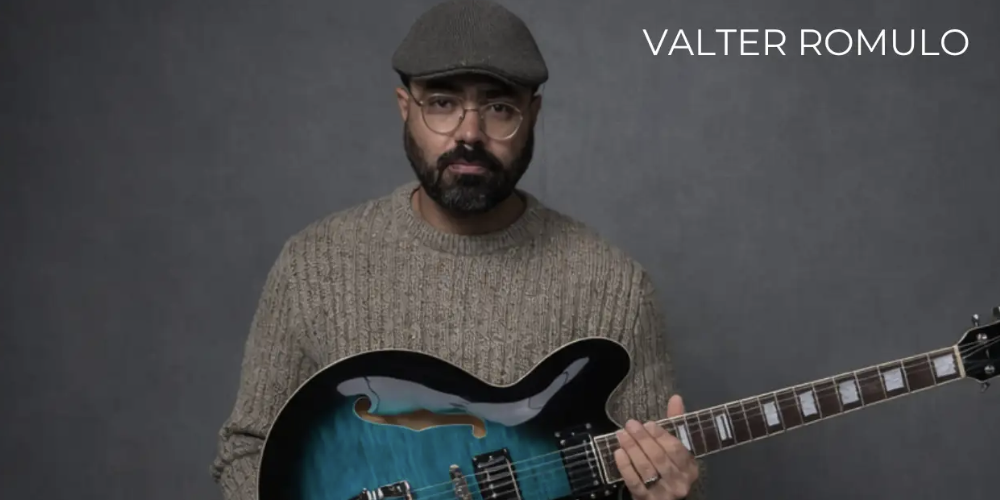
Valter Rumolo
by Marcela Villagómez
Picture this: it’s December in Galway, your first winter living abroad. You’re walking down Shop Street when Alicia Keys’ If I Ain’t Got You cuts through the noise. There is a busker with a guitar and a quiet intensity that makes you stop. You take out your phone, wanting to hold onto the moment.
That voice belongs to Valter Romulo, a Brazilian singer-songwriter whose music has become part of Galway’s streets. Valter’s path to Galway has been shaped by movement. Before settling in Ireland, he lived in England, Thailand and France; experiences that broadened both his worldview and his sound.
Since arriving in Ireland in 2023, Valter’s blend of emotive vocals, acoustic soul, and poetic songwriting has filled Galway’s streets, pubs, hotels and private events.
While music now shapes his life here, it was not his original plan. Valter first came to Ireland hoping to work in the IT sector. While waiting for a visa that would allow him to work legally, Galway’s artistic atmosphere pulled him towards music.
“We need to say something back. We are people.”
Valter has not faced physical racism in Ireland, but he did encountered hostility online.
“People hide behind fake profiles and say things like ‘Go back to your country’ or ‘You don’t belong here’, but we need to say something back. We are people. We feel cold, we feel hot, we bleed, we are equal,” he said.
Rather than silencing him, those experiences pushed Valter to respond through music. His decision to centre migration in his songwriting crystallised in late 2023 following an incident in Dublin that reverberated through migrant communities. Caio Benicio, a Brazilian delivery worker, intervened during a knife attack on Parnell Street and was praised for his bravery and hailed as a hero.
Shortly after, Valter wrote Imigrante, a song reflecting on the emotional realities of living far from home. Written originally for Brazilian communities abroad, the song quickly resonated beyond its intended audience. It has since amassed over 13,000 views on YouTube and more than 54,000 streams on Spotify.
“I wrote it thinking about Brazilian culture abroad; the homesickness, the small adjustments, the things people don’t talk about. It was originally for my community but then people came to me and said I should write a song about immigrants in general.”
Lyrics such as Every immigrant knows that the highest exchange rate is nostalgia, and Mum, I miss you, but your son is on the run, for a better life, capture the quiet contradictions of migration; longing and resilience, loss and hope; and how identity reshapes itself in a new place.
Encouraged by listeners, Valter felt compelled to go further. His upcoming single, Don’t Send Us Back Home, expands the conversation from personal experience to broader migration debates. The song reflects on contemporary anti-immigrant rhetoric, particularly in countries like Portugal, where Brazilian migrants have increasingly faced hostility.
While his lyrics draw from specific contexts, the Brazilian artist insists the message is universal. “People move because they’re looking for a better life. They are hard workers, good neighbours.”
Now that Valter has a more secure immigration status, Valter’s music continues to stand with those navigating uncertain legal ground.
“I know how hard it is to wait for a piece of paper. Some people are stuck in unsafe jobs or separated from family because of it.”
Galway has given him space to explore these themes creatively. The city’s international music scene has shaped his sound, exposing him to influences ranging from Jamaican rhythms to traditional Irish music. Earlier this year, Valter released Something I Love, a collaboration with Aisling Fuller, Galwegian singer-songwriter
“She’s an amazing artist. That song is an Irish and Brazilian collaboration, sung in English. It shows how supportive and open the music scene here really is,” he said.
Don’t send us back home
Don’t Send Us Back Home will feature on Valter’s upcoming album Raw, short for Roaming Around the World. The record brings together organic textures and global influences, exploring themes of self-love, romance and life on the streets alongside its political core. While migration is not the album’s sole focus, Valter says it is the emotional centre.
In 2026, the song arrives at a moment when migration remains a divisive issue in Ireland. Recent policy changes have tightened requirements for family reunification and extended residency thresholds for citizenship. According to Migrant Rights Centre Ireland, state reports from the Department of Finance and the National Economic and Social Council suggest Ireland should be attracting and retaining migrants to ensure economic sustainability and social cohesion; not restricting them.
The Brazilian musician understands why some artists avoid such topics. “People are afraid to talk about migration, but it’s necessary.”
As he prepares to release Don’t Send Us Back Home Friday 6 March, Mr Romulo hopes his music can humanise conversations too often reduced to numbers and policies.
“Stand for migrants,” is the message Valter hopes to bring across with his work.