Claddagh Watch Patrol: the volunteers keeping Galway’s waterways safe

RAG week
By Emma van Oosterhout
This article contains mentions of suicide
Mayo Monday and Donegal Tuesday have both passed without incident. But for the remainder of RAG Week, and for every weekend after, the volunteers of the Claddagh Watch Patrol will pull on their high-vis jackets and personal flotation devices, taking up position along the bridges of the River Corrib and the canals to keep the city’s waterways safe.
On Wolfe Tone Bridge, the wind cuts across the Corrib as Arthur Carr gestures downriver. It was here, he says, that a young man once told him he didn’t think he’d see his 21st birthday.
“He said, ‘I had my 21st a week ago,’” Mr Carr recalls reflecting on the patrol’s positive impact. “That’s the sort of thing we hear.”
Mr Carr founded the Claddagh Watch Patrol in 2019 after four water-related deaths in Galway in the space of a week. A public meeting was called that February. By 5 July, the first patrol was on the ground.
Today, the registered charity patrols the canals, bridges and riverbanks every Friday and Saturday night, typically from 9pm until the streets empty between 3am and 4.30am. Extra patrols are added for RAG Week, St Patrick’s Day, New Year’s Eve, the Galway Races, festivals in Fisheries Field, and Junior and Leaving Cert result nights.
“Anywhere there’s a big gathering in the city centre and people are within distance of the water, we’ll be out,” Mr Carr says.
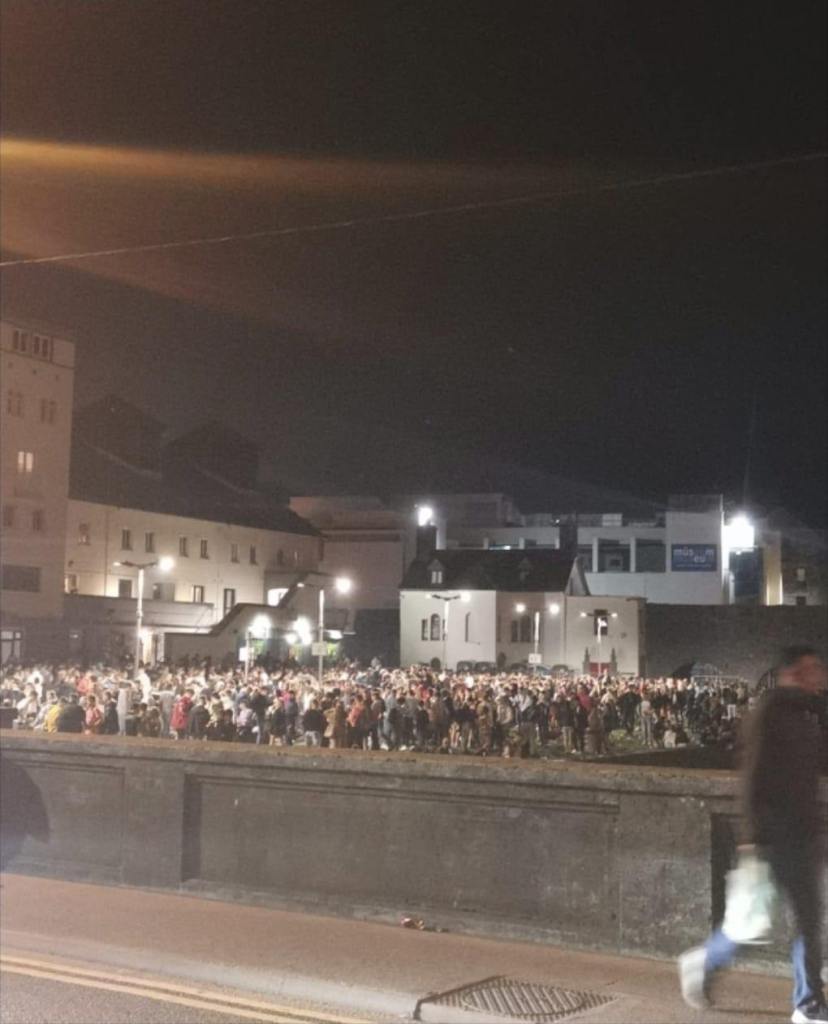
Leaving Cert results night last year saw an estimated 5,000 people gathered near Spanish Arch. Six incidents unfolded that night.
“We had two teams out but we had to split them. We had a team the far side of the arch, we had to put one in the middle, and we had to put another team up here,” he says, gesturing at Wolfe Tone Bridge. “We had three ambulances in at the one time.”
The Corrib is the fastest-flowing river in Europe. When the tide is out, rocks lie exposed beneath the bridges. Alcohol can blur that reality making some people feel invincible.
“We had a guy jump from about that first lamppost,” Mr Carr says, pointing towards Spanish Arch and recalling the revellers’ antics. “The tide was out and he jumped in. There was nothing there, only rocks.”
Emergency services were called. Fire brigade, Gardaí, and the Ambulance Service. “Pandemonium,” he says. The young man had injured his knee. Volunteers cut the leg off his trousers to treat the wound. “He was down a pair of trousers anyway,” Mr Carr laughs.
Not all of the patrol’s work is dramatic. Most of it is preventative: a kind word, a nudge away from the edge, a conversation started with, ‘How are you doing?’
Mental health issues feature heavily. So do alcohol and drugs.
“You combine mental health with alcohol and other substances, you’ve a recipe for disaster,” Mr Carr says. “It’s a cauldron of things.”
Seasonal shifts are noticeable. The long, dark evenings when the clocks go back bring a change in mood. “Generally speaking, during the summer everybody is happy. The sun brings out the best in people,” he says. “You get a couple of months respite.”
Sometimes, despite the patrol’s intervention, the same person may come on to their radar more than once. Mr Carr describes recent “repeat customers”: people nudged away from the water, assessed, and discharged within hours.
He admits “it’s a catch-22 situation […] The guards have done their job. But you can have a situation where someone is back out again two hours later. It can be disheartening, to be honest with you. We have to keep going.”
The patrol now has 82 volunteers and is aiming for over 100. Volunteers are asked to commit to one night a month, though many do far more. Training includes radio procedures, first aid, and mental health courses such as safeTALK and Applied Suicide Intervention Skills Training. Some complete Mental Health First Aid through the HSE.
“It’s a fair commitment,” Mr Carr says. “The commitment from them all is just amazing. There isn’t a lot more I can say about them.”
One volunteer, Chris, described why she got involved: “I’m self employed, I own a shop in the city,” she said. She found she had spare time to volunteer “and you feel like you’re doing something good.”
David, another volunteer on duty this week, says there has not been a single death in the Corrib while the patrol has been actively on shift.
The presence of the group has become familiar in Galway. Businesses offer support, such as tea and coffee at the Leonardo Hotel on long nights, pizzas from Monroe’s and Supermacs, slippers donated by the Shearwater Hotel in Ballinasloe for women heading home barefoot after a long night in heels.
“[During the Galway Races] last year we went through 49 pairs,” Mr Carr says. “It saves them sitting in casualty for three or four hours getting glass out of their feet.”
The goodwill of the locals, he says, is “constant”. People stop to shake hands, to say ‘thank you’. Occasionally, someone comes back months or years later to say: “only for you, I wouldn’t be here.”
Although stealing a ring buoy has been criminalised, volunteers still witness buoys missing from their boxes – stolen or thrown into the water.
“It’s not all doom and gloom out on the bridges either,” Mr Carr says. “We do interact with the public an awful lot and they’re very appreciative and they’re respectful. If we weren’t doing what we’re doing, if we weren’t doing it well, you wouldn’t get that.”
As RAG Week continues, the high-vis jackets will remain a steady fixture along the Corrib. A watchful eye over the fastest river in Europe.
If you have been affected by the content in this article, you can contact the Samaritans on 116 123 or jo@samaritans.ie