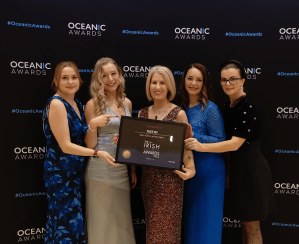
“Beyond the Finish Line”: Fiona Murtagh on Finding Joy, Balance, and Gold
By Eva Araña Molina

When Fiona Murtagh crossed the finish line at the 2025 World Rowing Championships, there was a brief moment of disbelief before the celebration began. Years of dedication and perseverance culminated in that single, unforgettable instant.
“It’s so surreal,” she says, reflecting on that golden moment. “It’s been such a journey — my first major international gold. Crossing the line first after everything I’ve been through was just unbelievable.”
For Murtagh, the win wasn’t just about being the fastest. It was about resilience; the kind built over more than half a lifetime on the water.
Fiona’s love affair with rowing began at just twelve years old in Galway. “At first, I just loved being around the people I rowed with, that community kept me going,” she recalls. “I never imagined I’d get this far until 2020, when I started training full-time with the national team.”
Her talent soon met opportunity. That same year, she earned a spot on Ireland’s Olympic team and, alongside her crewmates, captured bronze in Tokyo. A defining moment she remembers as both emotional and deeply personal.
“One of the highlights was on the podium,” she says. “Because of COVID restrictions, we presented medals to each other instead of having officials do it. I got to put Emily’s medal around her neck, and she did the same for me. It made the moment so intimate and special — I wish they still did that.”
But not every race ends with celebration. The Paris Olympics brought disappointment, a low point that forced Fiona to question her future in the sport.
“I had doubts,” she admits. “I wondered if rowing was still for me. But I was lucky to have amazing support from teammates, coaches, family, and friends. They helped me get back to myself, even stronger than before.”
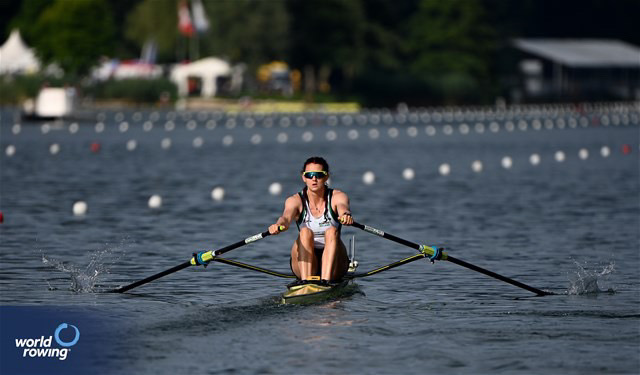
That comeback began in a single scull, a one-person boat she had never raced competitively before, which demands perfect technique and mental toughness — there’s no one else to match rhythm with or to share the strain. Learning to row alone was a fresh start, “It taught me so much about discipline and resilience,” she says.
After Paris, Murtagh joined the JP Morgan Athlete Transition Programme in Cork, taking on a full-time job while training at an elite level. Her days became a balancing act between spreadsheets and stroke rates.
“I train early mornings and evenings around a 40-hour work week,” she explains. “It takes a lot of time management and communication between my coach and manager. Weekends usually involve multiple sessions. It’s busy but yet rewarding.”
To outsiders, it might look like a double life. To Fiona, it’s a dual career. “People don’t see the hours behind the scenes,” she says. “Even though I row solo now, I never feel alone. I’m surrounded by a really supportive group of people who help me perform at my best.”
Galway remains the bedrock of her story. Both the Galway Rowing Club and the University of Galway Rowing Club played pivotal roles in shaping her as an athlete. “Those clubs saw potential in me early on and supported my Olympic campaigns,” she says. “The community there has always been behind me and that support means everything.”
It’s a connection that keeps her grounded, reminding her where it all began: a twelve-year-old girl learning to balance an oar on calm western waters, never imagining that one day she’d be a world champion.
At thirty, Murtagh knows her journey doesn’t fit the traditional athletic timeline, and she’s proud of that. “There’s this idea that success has to come early, but it doesn’t,” she says. “I just won a world championship at 30. Don’t give up or hold back because of age or fear of not being good enough. Try it, you never know where it might take you.”

It’s advice that resonates far beyond sport: trust your own pace and let passion lead the way.
Before every race, Fiona sticks to her small but meaningful rituals. “My teammate Allison always braids my hair, it’s our little tradition,” she says, smiling. Music also fuels her mindset. “For the World Championships, I was obsessed with Doechii— especially ‘Nosebleeds’ and ‘Alter Ego.’ I listen to them during warm-ups and races. They help me find my rhythm.”
As for the future, she’s keeping things simple. “I’m leaving the decision about staying in the single to my coach,” she says. “What matters most is that I enjoy what I’m doing. I love the day-to-day process more than just the podium moments. As long as I wake up enjoying it, I’ll keep going. The sky’s the limit.”
In the end, Fiona Murtagh’s story isn’t just about winning gold — it’s about rediscovering joy, redefining success, and rowing not just toward a finish line, but toward a fuller meaningful life.
Murtagh’s journey proves that the real finish line isn’t at the end of a race but in the quiet persistence it takes to begin again. Each stroke, each setback, and each sunrise on the water has shaped her not just into a champion, but into someone who rows with purpose.
In rediscovering her joy, she’s learned that success isn’t measured just by gold, but by the peace of knowing you’re exactly where you’re meant to be.