Triple Lock Reform and the Future of Irish Neutrality

Credits: United Nations Peacekeeping
By Marie Sobral
Irish neutrality, triple lock reform, and defence spending are under renewed scrutiny as the Government moves to boost defence spending, strengthen military cooperation with European partners, and review key restrictions on overseas deployments.
Once a defining feature of Ireland’s international identity, neutrality now stands at a crossroads. For decades, Ireland has embraced non-alignment, steering clear of military alliances while maintaining a strong record in UN peacekeeping missions.
Yet, in recent weeks, the Government has made clear its intention to increase the defence budget and modernise the country’s military power. Speaking to RTÉ, Taoiseach Micheál Martin assured that these changes, “will not compromise Irish neutrality.”
However, some see them as a slow drift toward militarisation. “I was quite happy with increasing the budget to the second degree, as recommended under the Commission on the Defence Forces” said Professor Ray Murphy from the University of Galway. “I believe in investing into a certain degree, but I think money could be much better spent on humanitarian aid.”
Debate over Triple Lock Reform and Irish Neutrality
One of the most contentious developments is the proposed removal of the triple lock mechanism. It currently requires approval from the United Nations, the Government, and the Dáil before Irish troops can be deployed overseas. The Government argues the system limits Ireland’s ability to respond rapidly to international crises.
“This is about exercising our own sovereignty,” said Micheál Martin. “We do not want Russia or other members of the Security Council vetoing decisions that the Irish Government should take with the Oireachtas, in terms of being part of peacekeeping missions into the future.”
The Government’s proposal to reform the triple lock has sparked public backlash. Prof Murphy argues that without the UN requirement, Ireland could be drawn into missions lacking international legitimacy. “I strongly object to any deployment of Irish forces outside of the framework of the UN. I think that’s fundamental to us and if you do that, it’s just another way of adding to the undermining,” said Prof Murphy. “For states like Ireland, all we have is international law. The UN Charter, the legal framework to guarantee our independence and sovereignty because we never have the means to fully defend it.”
“The Prime Minister has said we would participate in a UN approved peacekeeping mission. So what he is proposing is in accordance with the triple lock and in accordance with the UN Charter, and is similar to previous peacekeeping missions. So there is no threat, in my view, to our military neutrality.”
Spirit of the UN
The Taoiseach said that the proposed change in the triple lock would be “in the spirit of the UN Charter.”
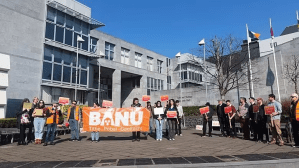
Despite the political momentum toward deeper defence integration, public sentiment remains strongly attached to neutrality. Protests in Dublin and recent polls reflect deep unease with current policy shifts. “I think when the chips are down, most people, they have a deep suspicion of anything militaristic.” Pointed out Ray Murphy before describing Irish neutrality as “still a valuable tool”, at least on a diplomatic level.
The path ahead remains uncertain. As EU security architecture evolves, and as global threats demand collective responses, Ireland stands at a crossroads.
Read more: Zelensky urges students to take action to help Ukraine’s defence