Seachtain na Gaeilge and the future of Irish Speaking

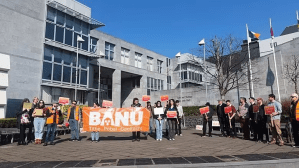
Seachtain na Gaeilge is taking place at present and will be running from the 1st until the 17th of March, with the University of Galway running many events throughout this week and next. Is féile idirnáisiúnta Ghaeilge í Seachtain na Gaeilge le Energia, atá ar an gceiliúradh is mó dár dteanga agus dár gcultúr dúchais a bhíonn ar siúl in Éirinn agus in go leor tíortha eile gach bliain. We have all seen the short film “Yu Ming is Ainm Dom”, most of us were coerced into it for the Leaving Certificate, but at the time we probably did not appreciate the message that was behind the film. The message of course being that Ireland has somewhat lost its cultural identity; we are after all an anglophone island.
In Article 8 of The Irish constitution (Bunreacht na hÉireann), it states that the Irish language is the first official language and that the English language is recognised as a second official language. Yet, according to Census 2022 data from the Central Statistics Office (CSO), 3.25 million people (about 63%) either could not speak Irish or did not report speaking it well from a population of 5.15 million. So, what does this tell us. Is the Irish language on its way to being only spoken by a half dozen loyal Connemara people? Some say that the numbers of people seeking to ensure the longevity of the language is rising, but is this happening fast enough and strong enough to keep the language alive. Rióna Ní Fhrighil, ollamh Pearsanta le Nua-Ghaeilge san Ollscoil na Gailimhe, was asked whether she believes enough resources and support to encourage the use of Irish is being bushed, “I think we need to have a more nuanced and complex understanding of what resources and support actually mean. Financial support is not sufficient if there are not meaningful and enjoyable opportunities to use the language in everyday life in Ireland, both in the Gaeltacht and outside the Gaeltacht. The most radical shift needs to happen at the level of attitude and understanding: a genuine understanding of the importance of the Irish language as an intellectual, creative, cognitive, linguistic, and cultural resource in itself”.
The Irish language made headlines recently in the Dail Eireann. Verona Murphy, the first female Ceann Comhairle in the history of the state, was elected speaker of the Dail late last year. However, Mrs Murphy does not speak Irish, this has raised questions over her ability to rule when Irish is spoken in the Dail. Recently, the Ceann Comhairle failed to catch Michael Martin using the Irish phrase “Tá tu ag insint bréage” to indicate that someone is lying. When the Leas-Cheann Comhairle was elected, John McGuinness said that “if you do say something in Irish in the middle of a heated debate, it might be no harm if you repeated it in English thereafter” asserting that “It might avoid a lot of work on committees and debate in this house”. This has brought up the question as to whether Irish Fluency should be a requirement for Ceann Comhairle, or even for the TDs. When asked if she thought if it is important that Irish is used in the Dáil, Rióna Ní Fhrighil said “I think that lip service in national political institutions is a disservice to the language and to its speakers. It is vitally important, however, that commitment to speaking the language meaningfully is shown by political leaders and those in positions of authority in an officially bilingual state. This is basic professionalism”
The Irish language is not only a language but a key element of Irish identity, heritage, and literature. It is closely linked to Ireland’s history, folklore, and mythology. Efforts continue to ensure its survival and growth in modern Ireland. Gaeilge is the backbone of what it means to be Irish. Our road signs, official documents, public transport, place names and even public notices are all conducted through Gaeilge. Yet, instinctively the majority of us will look for the English translation of whatever it is we are looking at. Is enough being done to promote the language? There have been numerous government supports to promote the language such as Official Languages Act 2003 & 2021, The 20-Year Strategy for the Irish Language (2010–2030) and Gaeltacht Support. In addition, the the government support there is community and national support such as the addition of new Gaelscoileanna, The growing success of Raidió na Gaeltachta and TG4, Conradh na Gaeilge and of course Seachtain na Gaeilge. Speaking to Julieanne Ní Mhullaoidh, Leas-Uachtarán don Ghaeilge about the importance of Irish week and if the tradition should continue, Julieanne stated “It’s very important, it’s a festival that celebrates our language on an international level. It highlights the importance of our language and promotes our culture”. Juileanne also went on to speak about the dynamic and numbers of people speaking Irish on a daily basis “There has been a significant uptake in the amount of people wanting to connect with their language, over the next few years I feel we’ll see a massive language revival”
More information on Seachtain na Gaeilge can be found by visiting https://snag.ie/
More information on the events hosted by the University of Galway for Seachtain na Gaeilge can be found by visiting https://su.universityofgalway.ie/news/seachtain-na-gaeilge-2025/