Pálás’ Last Goodbye: Another Casualty in Galway’s Wave of Closures
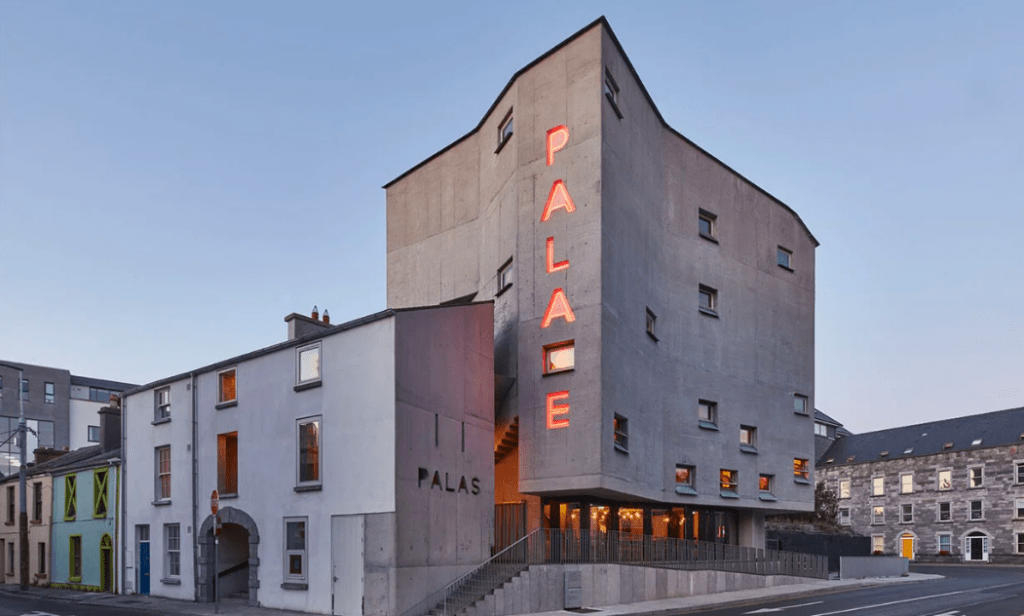
*Photo credits: Pálás Cinema
The curtain fell on Pálás on Thursday, February 27, after months of protests and demonstrations in vain to keep the cinema open. After seven years as a cornerstone of Galway’s cultural scene, Pálás has closed its doors, marking the end of an era for arthouse and independent film enthusiasts in the city. Beyond film screenings, the arthouse cinema hosted various events, including festivals, premieres, and community gatherings, solidifying its role as a cultural beacon in Galway, the UNESCO City of Film.
Lelia Doolan, a key figure in bringing the Pálás project to life, explained that the arthouse cinema was built as a way to bring people together. “This is really what our view and what our intention in building it in the first place was to bring together people in a community in the West of Ireland, not in Dublin.”
Despite its cultural significance, Pálás faced mounting financial challenges. In December 2024, the Light House Cinema Group, which operated the cinema, announced that Pálás would cease operations at the end of February 2025. The decision was attributed to rising operational costs and an oversaturated cinema market in Galway. I was, among others, Doolan’s involvement that helped shape Pálás into a cultural landmark. “Our intention was always to have a publicly funded space for auto cinema […]. The difficulty is if we want to keep it going, we’ve got to find cash and finding cash, it’s always a problem in these days.”
A Community United to Keep Pálás Alive
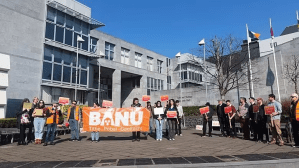
The news of the closure was met with a mix of sadness and frustration among Galway residents. Protests and public meetings under the “Save Pálás” campaign, aiming to explore avenues to keep the cinema operational. One notable protest occurred in January 2025, when demonstrators interrupted a Galway City Council meeting to voice their concerns, emphasising the cinema’s importance as a cultural and community space.
“We are full of hope that people will pay attention to what the public is saying. They want the Pálás to continue” declared Doolan. “These are the places in which independent and Irish and out of the ordinary films can be seen, and that is why these organisations help very much in keeping independent filmmaking alive, and that is really why Pálás is important, because there has to be somewhere to exhibit the films that are being shown.”

Pálás‘ Farewell
In its final week, Pálás played a series of classics, celebrating the art of cinema and drawing cinephiles eager to experience its unique setting one last time. The closure not only signifies the loss of a unique cinematic space but also raises concerns about the future of independent arts venues in Galway and beyond. The legacy of Pálás serves as a reminder of the vital role such venues play in enriching the cultural tapestry of a city.
Pálás screened its last movie, David Lynch’s Mulholland Drive, on Thursday evening. A fitting choice, perhaps, for an establishment that has been both celebrated and debated, much like the film itself. As its doors closed, the question lingers: was this a case of poor planning, market oversaturation, or simply the harsh reality that Galway audiences were not large enough to sustain an arthouse cinema?
A Trend of Small Businesses Closing
As Galway continues to evolve, the loss of such an institution is a poignant reminder of the city’s rich culture and the importance of preserving its heritage. Indeed, Pálás is not an isolated case as Galway has seen a disturbing trend of small businesses closing in the past few months. From beloved restaurants and pubs such as Ean or Tonery’s Bar, to independent retail shops, the tide of shutdowns is growing, raising fears about the future of the local economy, the survival of Galway’s iconic tourist attractions, and the erosion of its unique charm.
Local businesses, often considered the backbone of Galway’s economy, have in fact been grappling with a combination of financial pressures, including rising operational costs, tax hikes, staff shortages, and what many perceive as a lack of support from both local and national government. As several establishments close their doors for good, both business owners and the public are questioning what can be done to preserve Galway’s small-business landscape.
The impact of these closures is not just felt by the business owners but also by the broader community, particularly the tourism sector. Galway has long been a top destination for both domestic and international tourists, with small businesses playing a key role in the city’s reputation as a vibrant, welcoming place. The loss of these businesses has led to concerns that the city could lose its competitive edge as a tourist destination. In fact, Galway’s ability to maintain its reputation as a thriving cultural hub is now in jeopardy.
Local leaders, including Galway West TD Noel Grealish, have been outspoken in their calls for government intervention to help stave off further closures. Already last October, Grealish addressed the Dáil, stating that a reduction in VAT rates could have been a critical lifeline for many struggling businesses. “That reduction in the VAT would have been a lifesaver for [small businesses]. If we do not support the local café in the small village in the west and it is forced to close its doors, the tourists who now stop there may not stop there.” Grealish’s comments align with those made by business owners across the city.