


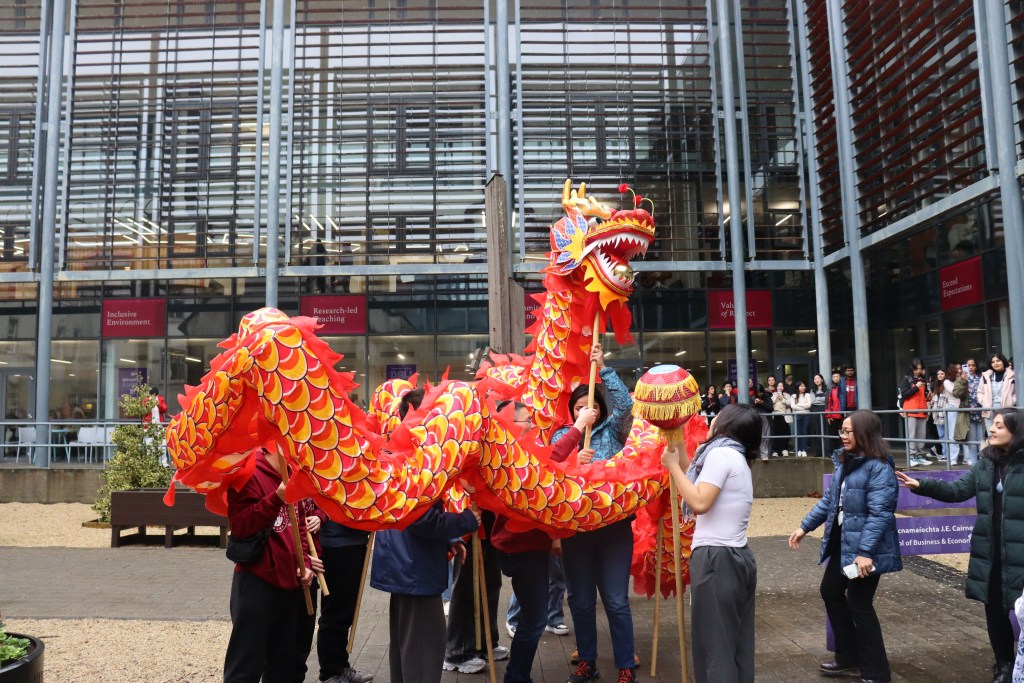
In a colourful display of cultural fusion and festival celebration, the J.E. Cairnes School of Business & Economics at the University of Galway recently hosted a spectacular dragon dance event to ring in the Chinese New Year.

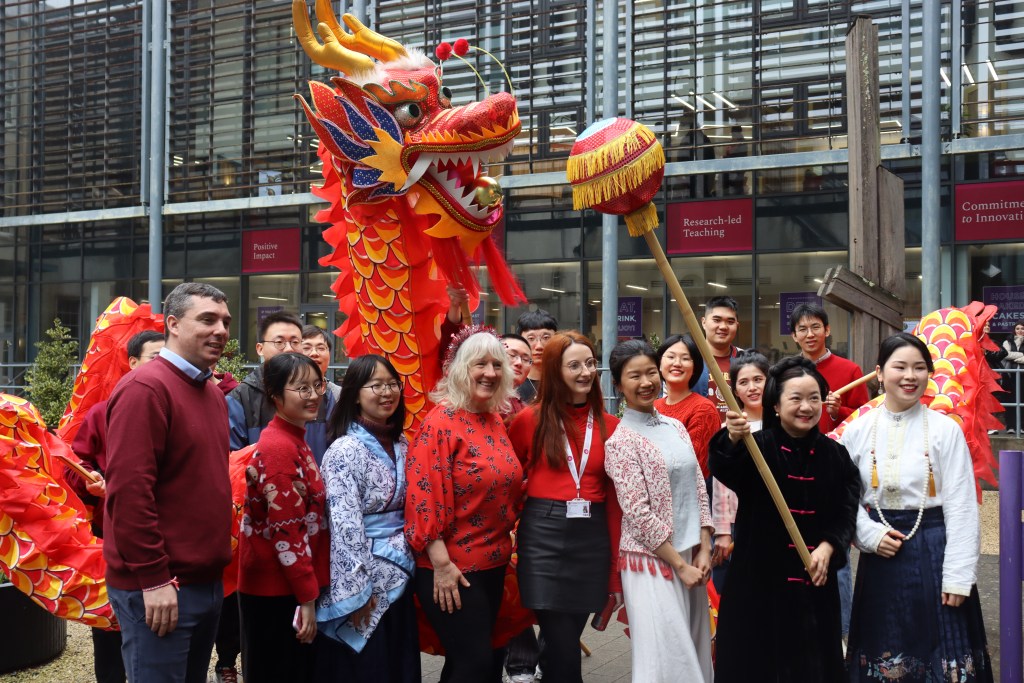
The dragon dance, performed by the Chinese Student Association, wove through the corridors and open spaces of the business school, bringing an atmosphere of joy and festivity. They manipulated a long dragon composed of many sections, each individually supported.
The students moved in sync with the rhythm of drums and music, creating a variety of complex and vivid movements that showcased the dragon’s agility and majesty. The sinuous movements of the dragon captivated the spectators.
“We have many international students, and we want them to feel welcome,” said Deirdre Curran, Vice Dean for Equality, Diversity & Inclusion for the College of Business Public Policy and Law.
“When there are major cultural celebrations, we want to try and celebrate them together with our Chinese community.” Mrs. Deirdre said.
In addition to the Dragon Dance, the business school offered a Chinese food tasting, enabling students from diverse cultural backgrounds to experience the celebrations of the Lunar New Year. Some Chinese students participated in this event wearing Chinese specialities.

Chinese food. Photo: Nannan Feng
“We hope the Dragon Dance will allow Chinese students to experience their home culture even while abroad and engage with other international students in the process,” said ChunXia Li, the Chinese society Representative.
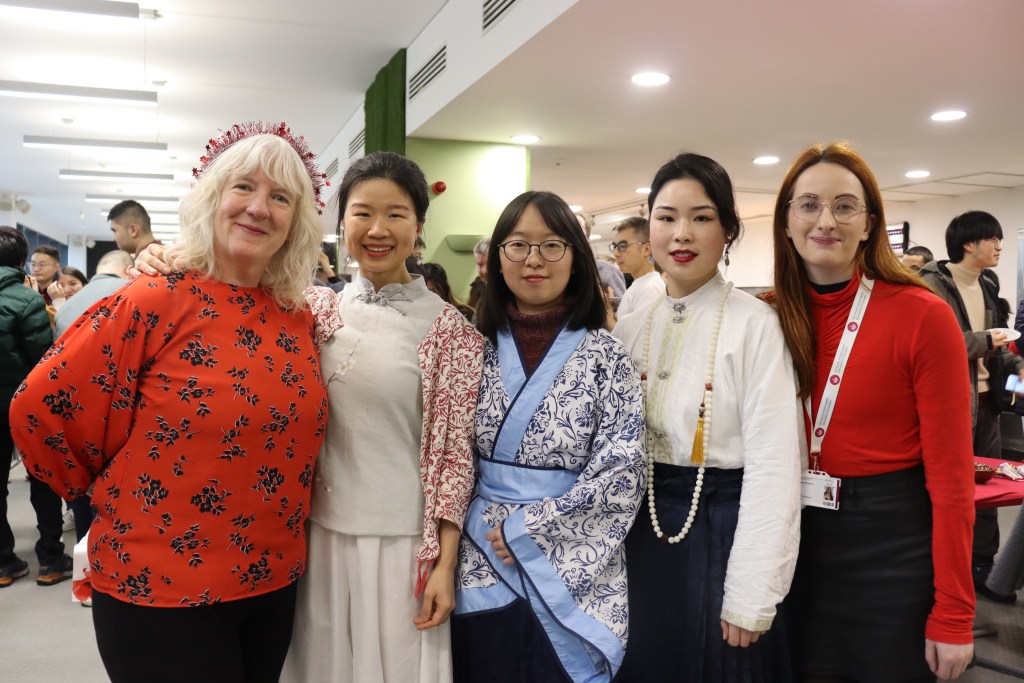
Students wear traditional Chinese clothes. Photo: Nannan Feng
“We come from different backgrounds, enjoying various Chinese foods. I’ve never seen anyone dressed like this before, and witnessing all of this is truly fascinating,” said Karthika Sasikumar, a J.E. Cairnes Business School student.
“By participating in this event, they can feel the warmth and sense of belonging at home, thus reducing feelings of homesickness,” said Chunxia Li.
Historical origin
The dragon dance originated as a ritual to worship heaven and earth and to pray for rain. In ancient China, the dragon was seen as the deity in charge of rain, which was crucial for the agrarian society.
Therefore, people performed the dragon dance to pray for rain from the dragon deity, ensuring a bountiful harvest.
Cultural significance
In Chinese culture, the dragon symbolizes strength, wisdom, and good fortune. It represents imperial power and dignity and is considered an auspicious symbol that can bring rain and prosperity.
The Dragon Dance is not merely an entertainment activity but also a way to express people’s desire for harmony with nature and a vision for a prosperous life.